Branded tech products used to be an afterthought. For years, the promotional object existed on the far edge of a company’s design conversation — a box to tick, a budget to exhaust, a logo to stamp on something cheap and forgettable. Consequently, the results were predictable: stress balls, foam koozies, plastic pens. Objects designed not to be used, but to be distributed. And as a result, most of them ended up forgotten in a drawer, then quietly discarded.
However, something has shifted — and as a designer, I find it genuinely worth examining.
Why Branded Tech Products Are No Longer an Afterthought
Tech companies, notably the kind that spend considerable effort crafting precise product languages, began to notice a contradiction. On one hand, they were shipping precision-engineered devices with considered material choices and deliberate tactile finishes. On the other hand, they were handing out foam objects at conferences. The mismatch was not merely aesthetic. It was, furthermore, a signal problem.
Every object a company places in someone’s hands is, in effect, a secondary product. It carries an implicit promise about quality, intention, and values. A poorly made giveaway next to a premium laptop does not simply go unnoticed — it quietly undermines the credibility of everything else. Conversely, a well-designed branded charger, weighted correctly and finished with restraint, reinforces the same trust that a flagship device is trying to build. The logic, therefore, is straightforward: if your products speak one design language, your branded objects should speak it too.
How Branded Tech Products Reveal a Brand’s True Values
What makes this shift particularly interesting — at least from a critical design perspective — is that it exposes what a brand actually believes about its audience. Cheap swag communicates, above all else, that visibility was the only goal. By contrast, a considered branded accessory communicates that the person receiving it is worth designing for. It signals utility over spectacle, quality over quantity, and longevity over the single-use gesture.
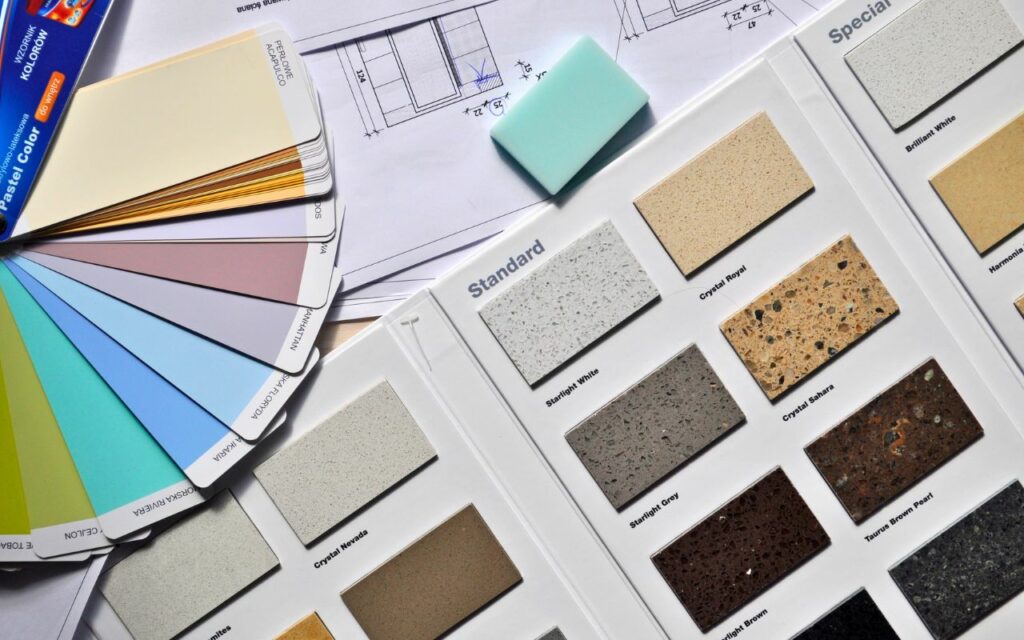
Vendors have responded accordingly. Where once the options were limited to generic forms with silkscreened logos, suppliers are now offering higher-specification materials, refined surface finishes, and customization options that align with each brand’s established product language. Additionally, the range has expanded: soft-touch coatings, anodized metal housings, bio-based plastics, recycled composites, woven textiles — the same CMF vocabulary that defines premium consumer electronics is, consequently, being applied to the promotional tier.
Branded Tech Products as a Proven Design Sandbox
This is, for me as a designer, where the conversation becomes genuinely exciting. Because beyond the branding logic, there is a practical design opportunity embedded in this category that is easy to overlook.
Branded tech accessories represent a faster, lower-risk space to trial material and finish decisions before committing them to larger product families. Consider, for instance, what it means to test a magnetic assembly detail, a specific soft-touch TPE coating, or a mono-material housing approach on a cable organizer. The production cycles are shorter, the stakes are lower, and — notably — the feedback is honest. People either reach for the object every morning, or they do not. That result, moreover, is more telling than any internal design review.
Furthermore, the ergonomic standards that apply to branded tech accessories are the same ones that govern any well-designed object. Bag-friendly proportions, one-hand usability, intuitive cable management — these are not embellishments. They are the difference between a product that travels with someone and one that stays on a shelf. Thoughtful ergonomics, in other words, are not optional even at the promotional tier.
Sustainability Cues: A Critical Look
It would be incomplete, however, to discuss this shift without addressing sustainability — because CMF trends in 2025 and beyond are inseparably linked to circular design thinking. Disassemblable components, clearly mono-material housings, and visible recyclability signals have become, as a result, design features in their own right. They communicate environmental intentionality at a glance.
Whereas previous generations of branded objects offered no such cues — indeed, they were designed to be disposable — the new generation signals longevity, repairability, and responsible sourcing. Despite the relatively modest scale of a branded accessory, these choices carry weight. They suggest, above all, that the company has thought carefully about what happens to the object after it leaves the room. And that suggestion, however subtle, shapes perception in lasting ways.
From a critical standpoint, this is where selecting the right CMF approach becomes less a technical decision and more an ethical one. The material you choose for a branded desk accessory is, essentially, a public statement about what your brand considers acceptable.
What Branded Tech Products Mean for the Future of Design Language
Altogether, this trend points toward something larger than promotional strategy. It reveals that the boundary between “functional product” and “brand expression” has, in practice, dissolved. Whether a company is designing a flagship peripheral or a branded charging cable, the same fundamental questions apply: What does this object feel like to hold? What does it say about the people who made it? What becomes of it at the end of its life?
The companies investing seriously in branded tech accessories are, therefore — consciously or not — building a secondary portfolio of design language. One that influences how partners, employees, and clients perceive their design sensibility long before a major release lands. It is a quiet form of design communication, yet consequently one of the most persistent.
Explore an Insider Designer’s Portfolio
This kind of thinking — material honesty, functional clarity, and purposeful ergonomics — is precisely what shapes my own practice. At Intellence, my work spans industrial design, ergonomic furniture, structural components, and product prototyping. Each project, regardless of scale, follows the same principle: every object deserves considered materiality, honest function, and a clear sense of purpose. Furthermore, if you are curious about how that approach translates across product categories — from a branded accessory to a full furniture system — I invite you to explore the portfolio and learn more about my background and services. The work speaks for itself.