Upcycling does not ask you to decorate more cheaply. It asks you to see differently. I have spent years reading material surfaces the way a critic reads a canvas. So I find the current wave of cost-conscious upcycling far more interesting than the financial argument suggests. Around 80% of consumers now actively rethink how they furnish their homes. Rising living costs drive that shift. Consequently, something unexpected emerges: a collective appetite for objects with provenance, texture, and story. People want furniture that wears its history visibly, rather than hiding behind factory-perfect surfaces.
Upcycling as a Cultural Signal, Not a Budget Hack
The temptation is to read this movement as purely economic. When budgets compress, people improvise. Nevertheless, that reading misses the deeper current. These consumers want to build skills, reduce waste, and create personal interiors. Those values map almost exactly onto what serious designers have championed for decades. Therefore, this is not a moment of compromise. It is a moment of convergence. The design conversation and the domestic conversation arrive, finally, at the same place.
Furthermore, the global market signals the same shift. The upcycling economy heads toward $56.8 billion by 2027, according to City Thrift’s circular economy research. Reclaimed material carries cultural value that new material cannot manufacture. Additionally, the environmental argument compounds the aesthetic one. Redirecting material from landfill reduces embodied energy and cuts methane generation. It also supports the circular flows that sustainable manufacturing demands.
In other words, the person who reupholsters a stool this weekend operates within the same logic as the industrial designer specifying recycled-content panels.
Upcycling Through the Lens of Material Memory
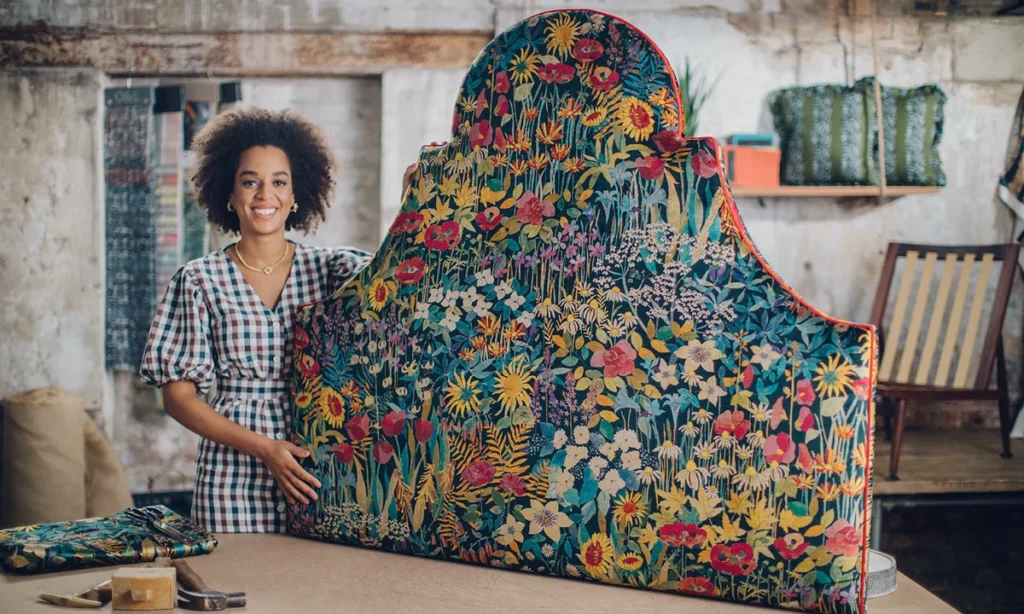
The most revealing concept in high-art upcycling is material memory. Found objects carry embedded histories in their patinas, deformations, and surface treatments. Consider kintsugi, the Japanese practice of repairing ceramics with gold-laced lacquer. It illuminates the fracture rather than concealing it. The repaired object consequently becomes more beautiful because of its damage, not despite it. Upcycling, approached with the same intentionality, operates identically.
Moreover, material thinking evolves at the industrial scale too. I explored this directly in my piece on lignin-based 3D printing — a process that transforms wood industry waste into fully recyclable, wood-like objects. That technology and hand upcycling share the same root instinct: refuse to treat discarded material as finished. Both ask what the residue can still become, rather than accepting its disposal.
Additionally, the Dezeen archive on upcycled design shows repeatedly that the most arresting contemporary furniture emerges from hybrid material assemblies. Scaffold planks meet cast-iron brackets. Steel tube legs graft onto reclaimed oak tops. Glass industrial fittings become pendant lights. The visual tension between those materials gives each piece its character. Similarly, sourcing from salvage yards or construction sites means absorbing cultural sediment — the compressed biography of previous use.
The Method: Where Craft Meets the Critical Eye
Practically, the upcycling method begins with an audit of what already exists. Walk through your garage, attic, or storeroom. Identify items you no longer use as they stand.
That dresser with peeling veneer? Strip it and refinish the solid wood beneath.
Those mismatched frames? Paint them identically and hang them as a gallery cluster.
Specifically, the key is seeing potential where another person sees disposal. Moreover, once you exhaust personal inventory, source strategically. Construction sites, salvage yards, and office furniture liquidations all yield extraordinary raw material for designers willing to look.
Then the critical designer’s eye takes over. In the high-art upcycling approach, surface preparation becomes a curatorial act. A raw weld left deliberately exposed makes a statement. A patch of original paint preserved beneath a translucent wash does the same. An area of oxidised metal, sealed and celebrated rather than sanded away, tells the object’s story honestly.
Furthermore, the join becomes the locus of meaning. Instead of concealing where one material meets another, the high-art approach exposes it. The joint becomes the argument: these materials did not originally belong together. Yet here they stand, held with precision and intention.
Upcycling Skills: Building Confidence Through Completed Objects
Ultimately, skill development follows a clear progressive logic. Start with one small project — paint a chair, reupholster a stool, refinish a salvaged table. Specifically, document every stage. Photograph the raw material. Note the products and techniques you use. Record what surprises you. After that, each completed object becomes a chapter in a larger design education.
As the Ellen MacArthur Foundation’s circular design framework argues, closing material loops requires designers at every scale to keep material in use and extend its life. That principle applies equally to industrial specifiers and to someone re-covering a dining chair.
Moreover, build relationships with local contractors and fabricators. Tradespeople regularly discard remarkable material — structural steel angles, decommissioned fasteners, terracotta tiles from demolished buildings. Additionally, share your process publicly. Post progress photographs. Ask questions when you encounter problems.
The upcycling community grows because practitioners help each other. Furthermore, the visible evidence of process — not just the polished result — builds authentic design narrative that no marketing budget can replicate.
From Home Decor to Gallery-Level Furniture: Scaling the Vision
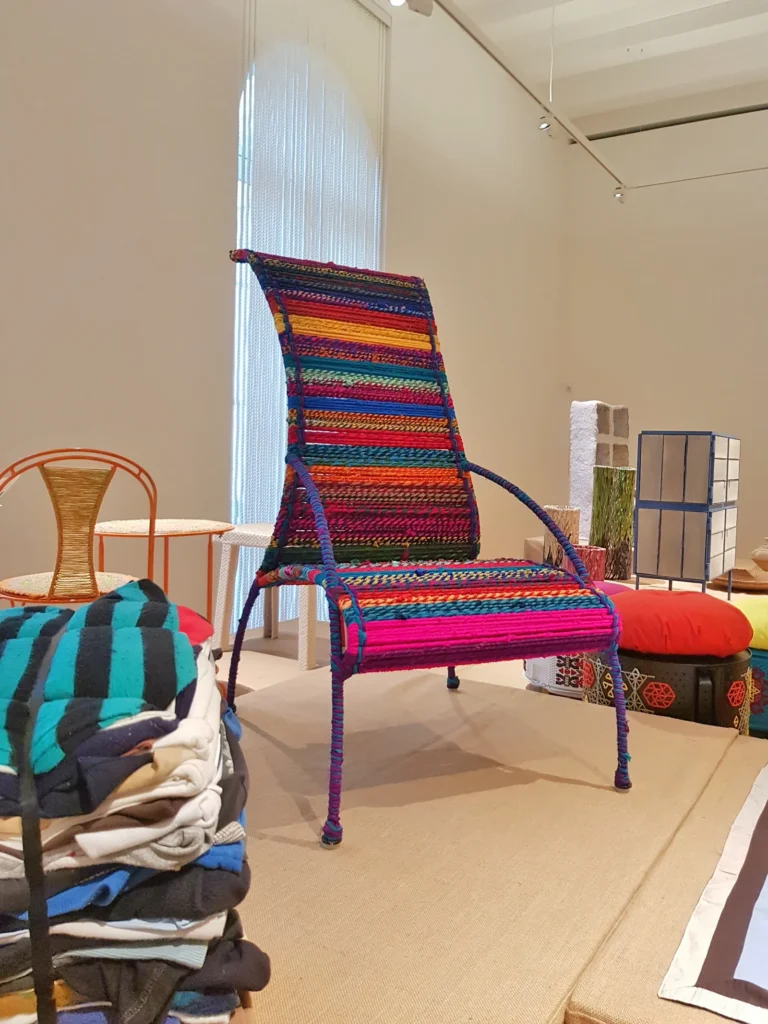
The broader ambition, therefore, is to operate these principles at gallery-level resolution. Consider cheap or discarded components not as substitutes for better materials. Instead, treat them as the primary design language. A diorama base constructed from reclaimed industrial offcuts. A tech shell fabricated around decommissioned electronic components. A lounge chair built around a found structural frame. Subsequently, each of these objects carries something a mass-produced piece never can: a provable history and a visible making process.
Above all, cost-conscious upcycling reframes the design question itself. Instead of asking how to decorate within budget, it asks how to design with integrity under constraint. That reframing transforms a practical response to economic pressure into a philosophical position. Consequently, your next breakthrough piece may not come from specifying a new material. It may come from finally seeing what the discarded one already wants to become.
Connected Thinking: Explore Further on intellence.eu
The conversation around upcycling connects material culture, narrative design, and sustainable manufacturing. These are themes I explore continuously at intellence.eu/news. My recent piece on Narrative Art Pieces as the New Statement Sofas examines how story-driven objects reshape the relationship between furniture and identity. That is a direct extension of what high-art upcycling proposes.
Furthermore, my exploration of REHAU Eco Materials and the luxury sustainability shift shows that premium sustainable surfaces now match virgin-material alternatives in specification. Meanwhile, my own background spans furniture design, steelwork and crane manufacturing at WORX Constructions, and two decades of CAD-driven industrial prototyping.
Consequently, whether I design for a production run or write about the poetics of repair, the same question drives the work: what does this material want to become?