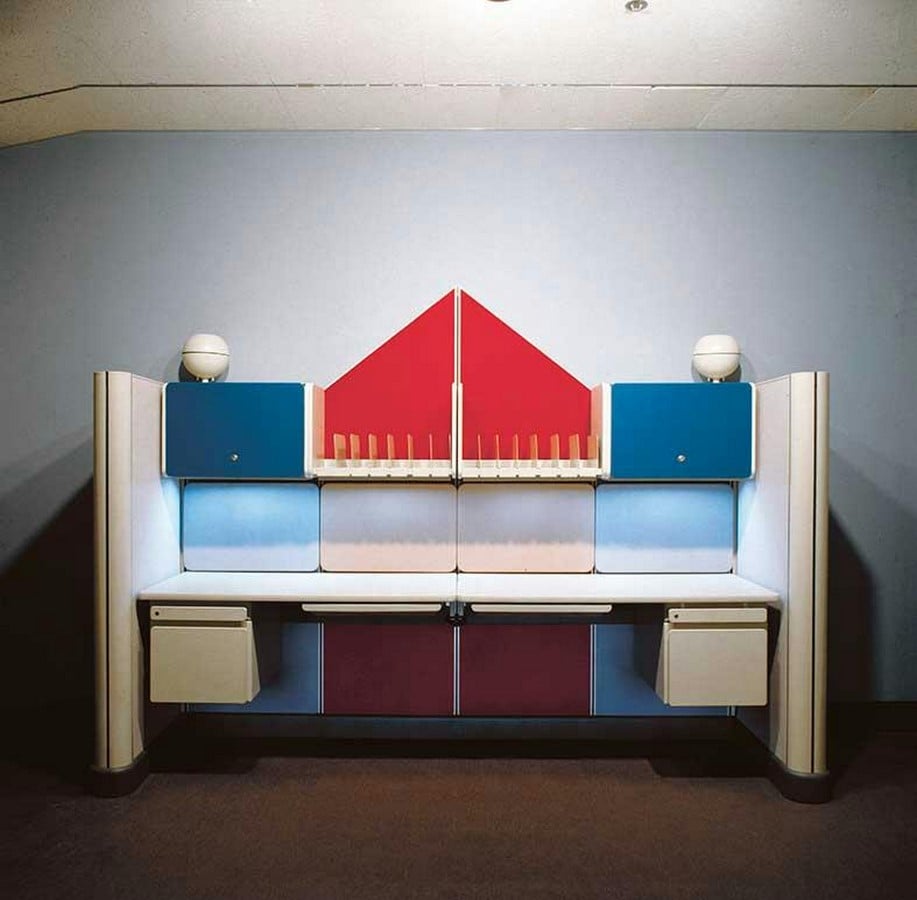
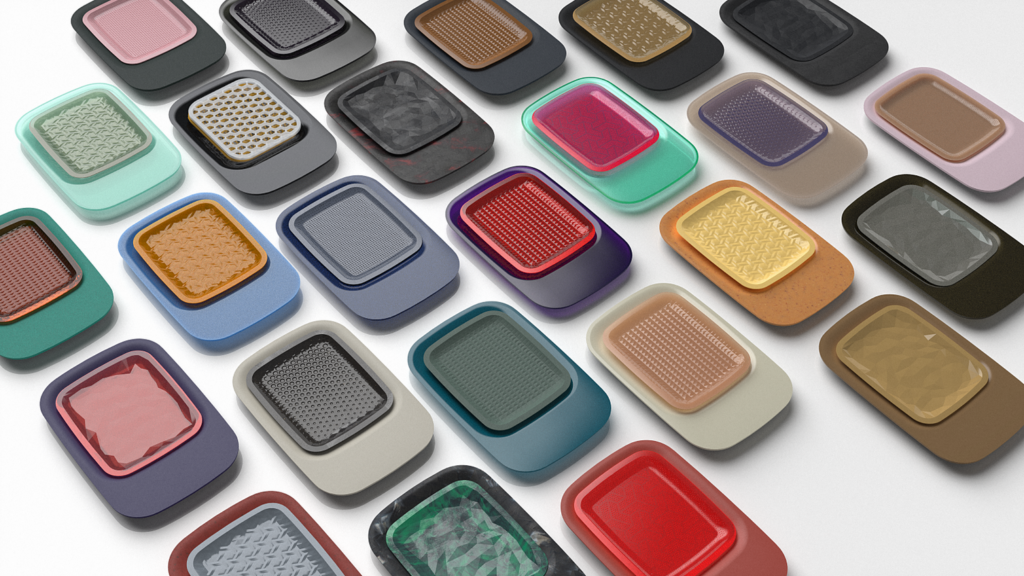
Envelope-first thinking is not a trend to watch from a distance. In fact, it is the most important shift in design right now. Moreover, it belongs inside product and furniture design just as much as it belongs in architecture.
For decades, form came first. Physics, however, came second. Designers sketched. Clients approved. Then engineers patched thermal problems and compliance gaps into shapes that already existed.
That sequence has finally reached its limit. Instead, a new generation starts with the thermal envelope, the airtightness layer, and the regulatory requirements. As a result, visual language builds on top of that performance foundation. Not the other way around.
I have spent years working across steel structures, fluid mechanics, and ergonomic furniture. Therefore, this shift feels not only right but genuinely overdue.
Envelope-first Is a Design Posture, Not a Penalty
When architects treat the building envelope as a performance system, they transform physics into the first creative constraint. Similarly, the same logic applies directly to product housings and furniture shells.
Here is what usually happens instead. A designer shapes a housing for visual impact. Subsequently, ventilation slots, EMC shielding, and insulation follow as engineering afterthoughts. Consequently, that sequence produces incoherent objects.
The thermal bridging problem in wall assemblies, for example, appears just as clearly in gaming hardware that throttles under load. It also shows up in lounge chairs whose metal armrests transmit cold straight to the user, regardless of finish.
The Passive House Institute codified performance-led reasoning for buildings long ago. Nevertheless, product design has not absorbed that lesson with the same discipline. As a result, the gap shows up in every object that looks considered but feels wrong.
The key insight here is about timing. Specifically, envelope decisions must arrive at the concept phase. Not at manufacturing sign-off.
That same discipline must, therefore, govern CMF selection from day one. Tactility, emissivity, thermal conductivity, surface hardness, and regulatory flammability limits should all shape the form early. In other words, they should not confirm it later.
Take a gaming peripheral housing as a clear example. Its outer shell must do four things at once. First, it manages heat from internal components. Second, it controls the feel at the user’s wrist. Third, it must meet RoHS directives. Finally, it must carry a coherent brand identity under retail lighting.
These four demands do not conflict. In fact, they collapse into one strong design move. However, that only works when you begin with all four together.
The IDSA has long positioned CMF as a primary expressive tool. Now, furthermore, it must carry equal weight as a performance instrument. As such, that shift starts at the mood board stage.
How To Justify Bold Material Experiments Through Performance Logic
Envelope-first thinking gives designers a powerful tool. Specifically, it provides a performance-based reason for material ambition.
Phase-change fills in lounge seat cushions. Ventilated double-skin surfaces on gaming chairs. Additionally, radiant insulating membranes in headset housings. None of these need to apologise for their added complexity.
Indeed, they work as performance necessities, not decorative extras. Therefore, they carry the same authority a structural engineer has when specifying load-bearing components.
This framing also changes client conversations. Instead of presenting a material upgrade as a cost-add, you present it as a heat management strategy, a compliance solution, and a longevity investment in one move.
For instance, ventilated radiant facades earn their place in architectural budgets because they solve thermal bridging and weatherproofing together. In the same way, a phase-change fill in seating earns its place by reducing body-heat build-up, extending material life, and measurably cutting thermal discomfort across a full working day.
Platforms like Material District track these material systems continuously. Moreover, the vocabulary they offer grows faster than most project timelines allow. So the envelope-first designer builds material literacy before the brief arrives, not after.
The Micro-Envelope as a Unified Creative System
Every housing, shell, and furniture skin is a building envelope at its own scale. In other words, it separates a controlled interior from an uncontrolled exterior. Furthermore, that separation always carries thermal, acoustic, haptic, and regulatory dimensions together.
Accepting this framing, therefore, transforms the design brief entirely.
For example, a cabinet back panel becomes a vapour-control layer. Similarly, a matte polymer texture becomes an emissivity decision that affects both touch comfort and infrared behaviour. Likewise, a perforated metal grille becomes a deliberate ventilation strategy, not a style reference.
Joinery details and assembly nodes change too. Specifically, they become potential thermal bridges to design around consciously, rather than manufacturing tolerances to accept without question.
This is how progressive architecture already thinks. And, equally, it is how the boldest product designers are starting to think, even as the shared vocabulary between disciplines keeps developing.
Envelope-first and My Design Practice
My earlier piece on Design Engineering argued that fusing art, mathematics, and structural reasoning into one creative act defines the next design generation. Indeed, envelope-first thinking is exactly that fusion made practical.
Similarly, my analyses of REHAU Eco Materials and Net-Zero Materials explored how performance-led surfaces are already rewriting what luxury and sustainability mean in interior design. In both cases, the pattern is the same: physics first, aesthetics on top.
My background supports this directly. Specifically, formal training in fluid mechanics and airflow thermodynamics, combined with years developing furniture series, metal structures, and thermally optimised workstations for gaming and professional use.
As a result, I approach every shell not as a skin to style, but as a system to engineer. Then, finally, to make beautiful.
Above all, envelope-first does not narrow design. Instead, it makes bold material choices defensible, durable, and genuinely meaningful.
To provide the best experiences, we use technologies like cookies to store and/or access device information. Consenting to these technologies will allow us to process data such as browsing behavior or unique IDs on this site. Not consenting or withdrawing consent, may adversely affect certain features and functions.
Functional
Always active
The technical storage or access is strictly necessary for the legitimate purpose of enabling the use of a specific service explicitly requested by the subscriber or user, or for the sole purpose of carrying out the transmission of a communication over an electronic communications network.
Preferences
The technical storage or access is necessary for the legitimate purpose of storing preferences that are not requested by the subscriber or user.
Statistics
The technical storage or access that is used exclusively for statistical purposes.The technical storage or access that is used exclusively for anonymous statistical purposes. Without a subpoena, voluntary compliance on the part of your Internet Service Provider, or additional records from a third party, information stored or retrieved for this purpose alone cannot usually be used to identify you.
Marketing
The technical storage or access is required to create user profiles to send advertising, or to track the user on a website or across several websites for similar marketing purposes.