Sotiris Lazou does not design objects for the market. Instead, he designs them for life. His work starts with a simple question: what does this object truly need? Everything else gets removed. The result is always honest. And sometimes, it earns global attention.
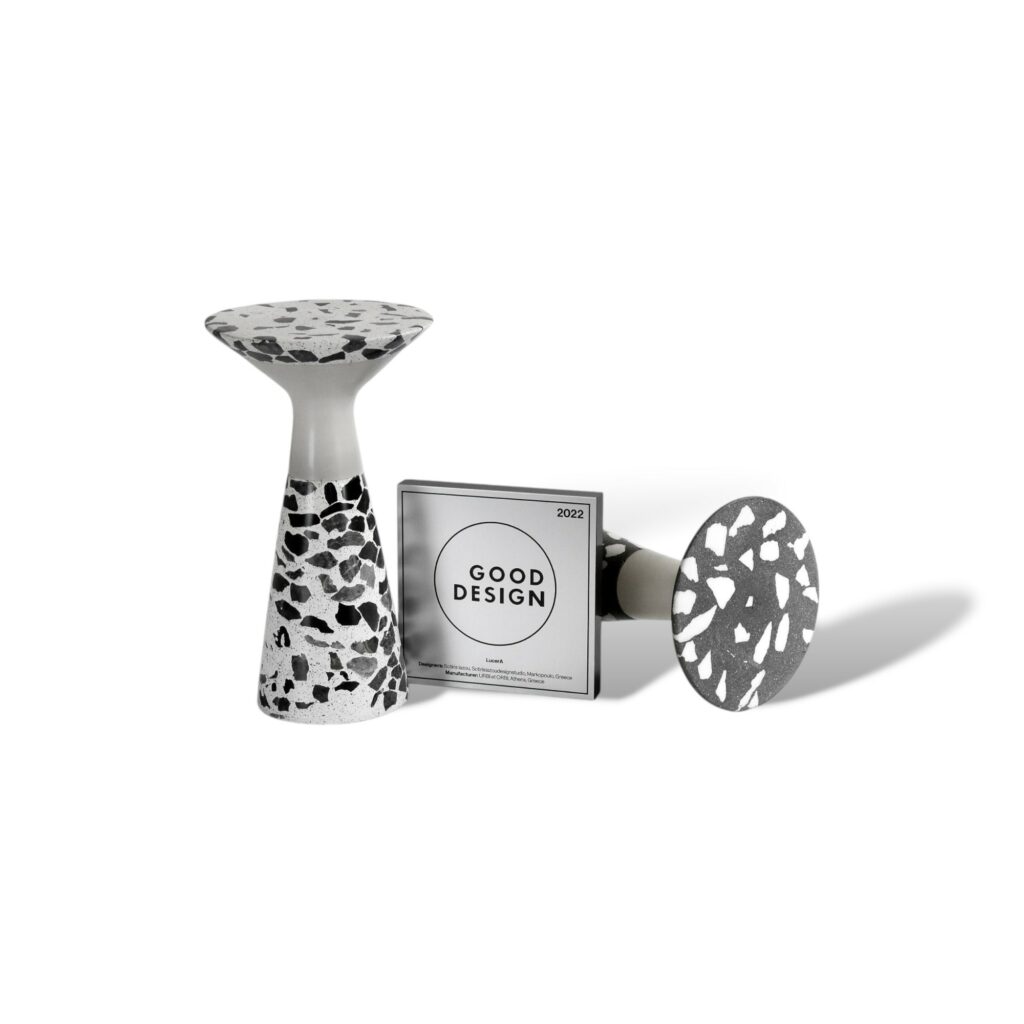
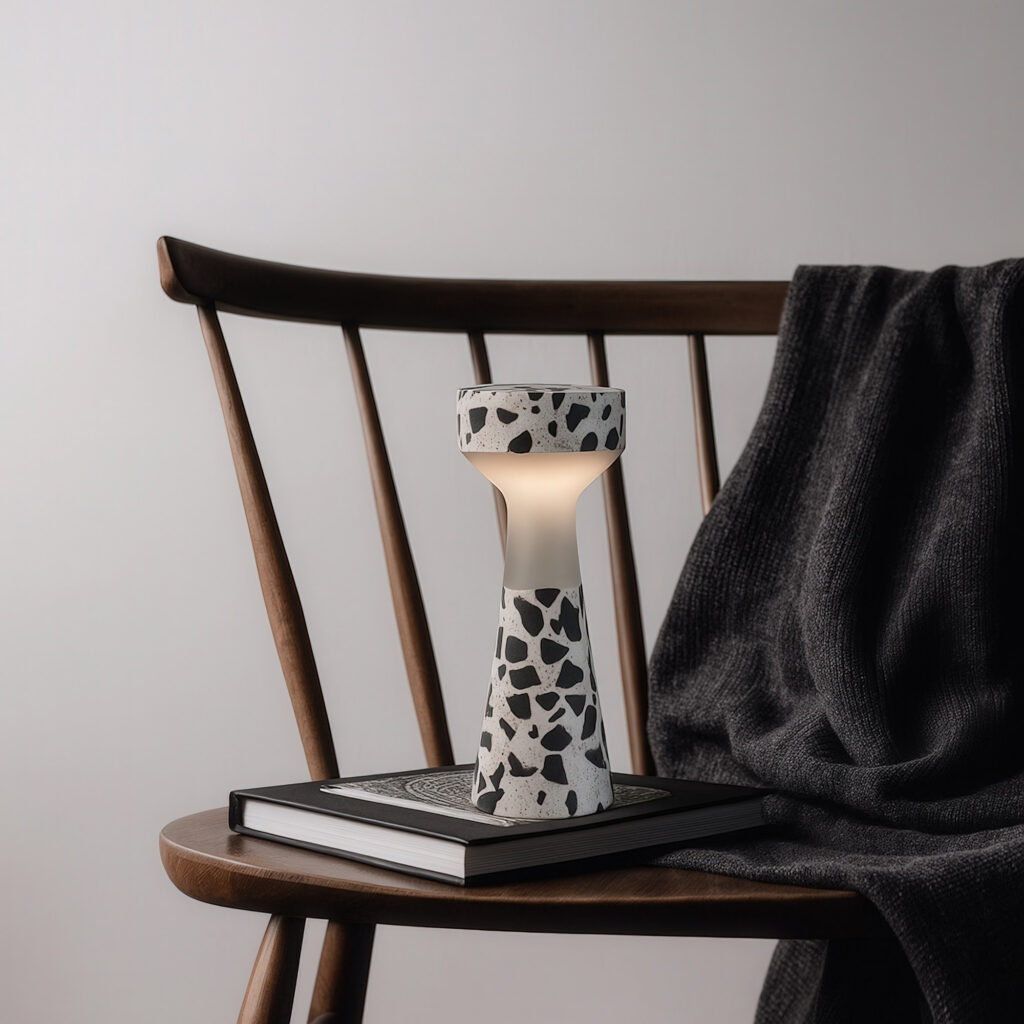
The LucerA table lamp is a clear example. Lazou built it in Athens with manufacturer URBI et ORBI. Together, they created a lamp from concrete and resin. It is also rechargeable and fully handmade. In 2022, it won a Good Design Award from The Chicago Athenaeum: Museum of Architecture and Design. That is one of the oldest design prizes on earth.
Sotiris Lazou and the Material He Chose
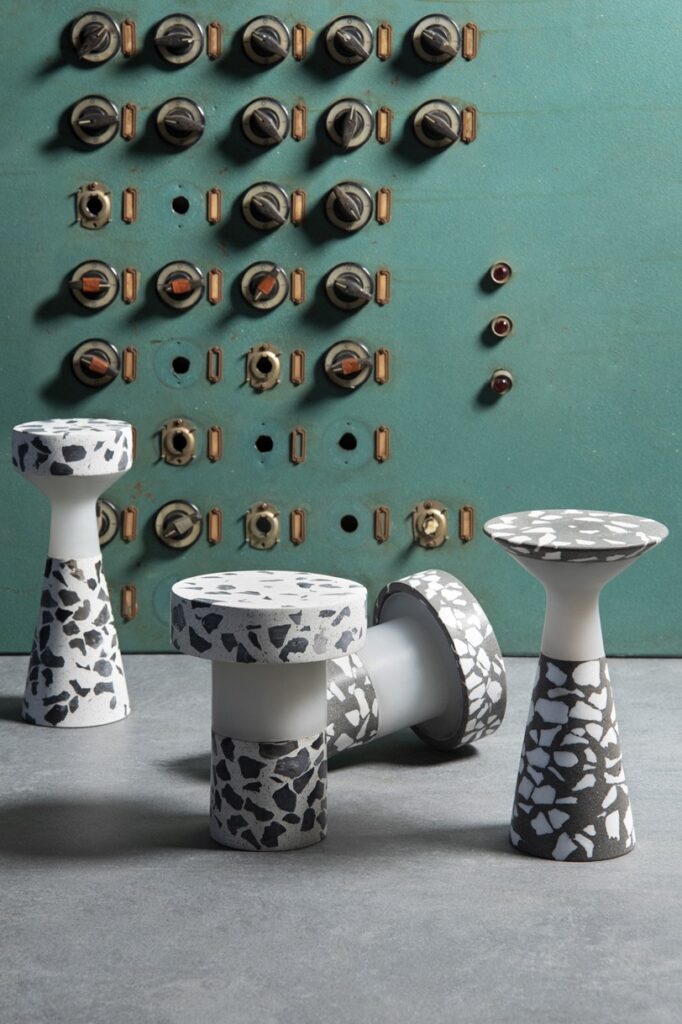
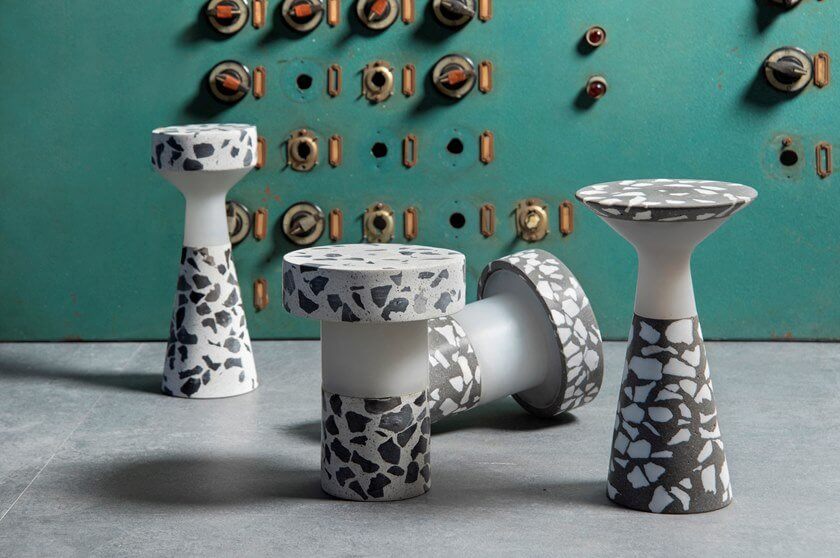
Concrete is not a trendy choice. In fact, it is a brave one. Lazou picks it because it is real. It has weight. It has history. Moreover, in the LucerA, it takes the form of terrazzo. Terrazzo is a polished surface made from stone chips set in cement. Craftsmen have used it for centuries, from Venice to Miami.
Today, terrazzo is making a strong comeback. ArchDaily shows how terrazzo surfaces connect to a hunger for honest, handmade materials. However, Sotiris Lazou understood this long before the trend took hold. He chose the material not for fashion, but for meaning.
Each lamp starts as a cast. First, the two terrazzo sections are made separately. Then the resin detail is cast on its own. After that, all three parts come together and are polished by hand. But this process takes real time. As a result, that time becomes visible in the quality of the surface. The resin section is semi-transparent. So light passes through it in a soft, diffused glow. The lamp does not simply light a room. Instead, it performs in it.
The LucerA is also available in three designs. Furthermore, it works both indoors and outdoors. This flexibility makes it one of the most adaptable lamps in its category.
Sotiris Lazou and the Lesson from Enzo Mari
Every designer carries their teachers with them. For Sotiris Lazou, one teacher stands above the rest: Enzo Mari. Mari was an Italian designer and deep thinker. He believed that good design removes everything it does not need. Nothing extra. Nothing false. Just the object in its most honest form.
Lazou speaks of this clearly. In his own words: “My professors such as Enzo Mari taught me that a Good Design is to remove everything that you don’t need… Be real.” Indeed, the Istituto Marangoni traces how Mari’s thinking shaped European product design for generations. That thinking lives clearly in the LucerA. Every part earns its place. There is no detail for its own sake.
This is not minimalism as a visual style. Rather, it is minimalism as a discipline. And that difference matters a great deal. Moreover, it explains why LucerA feels timeless rather than fashionable.
How the LucerA Lamp Works
Lazou treats technical decisions with the same care as visual ones. The LED module inside LucerA uses 16 NICHIA diodes. Together, they produce 190 lumens. The colour temperature sits at 3,500 Kelvin. That is a warm, soft tone. Additionally, it flatters the stone surface and the people nearby. The lamp also lasts over 50,000 hours. In practice, it outlasts most trends on the market.
However, the most important technical choice is the battery. Lazou fits LucerA with a 7.2V rechargeable NiCd cell. It runs for eight hours on a single charge. So the lamp needs no wall socket. You take it outside. You move it from room to room. Consequently, the lamp changes how you live in your space. That freedom is a design decision, not just a feature.
Beyond this, the rechargeable system reflects a wider commitment. Long-life LEDs and a rechargeable cell mean fewer replacements. Therefore, LucerA carries a quiet but clear sustainability message.
Sotiris Lazou and the Good Design Award
The Good Design Award started in 1950. Charles and Ray Eames helped shape its early years. Eero Saarinen contributed too. So did Edgar Kaufmann Jr. from MoMA. Today, The Chicago Athenaeum runs the program alongside the European Centre for Architecture Art Design and Urban Studies. It remains one of the most respected design prizes in the world.
In 2022, LucerA won it. This places Sotiris Lazou in outstanding company. The jury looks for clear form, honest function, and lasting visual quality. LucerA meets all three. Furthermore, the win proves a wider point: Athens produces world-class design. Indeed, you do not need Milan or Copenhagen to build a lamp that earns global recognition.
Connecting Materials and Ideas
LucerA asks a simple question with every design choice. What does this object truly need? Concrete answers: permanence. Resin answers: lightness and glow. The battery answers: freedom of movement. Together, these choices tell a story. And that story lifts a product above function into meaning.
As a product and furniture designer, I return to this kind of thinking often. Whether working on flat-pack furniture or material-led objects, the challenge is always the same: strip it back to what matters. This is the same discipline that Lazou applies. And it shows in every surface of the LucerA. For more design writing on material thinking and product strategy, visit intellence.eu/news. For the full professional background and project work behind these perspectives, explore intellence.eu/resume.