REHAU Eco Materials are changing the design world. And not quietly. For years, designers like me have watched sustainability and luxury circle each other warily. Now, finally, they are sharing the same surface.
This is not a story about a brand going green. It is a story about what luxury actually means in 2026.
REHAU Eco Materials and the End of the Compromise
Sustainable surfaces used to carry a silent trade-off. You could have the recycled content. Or you could have the depth of finish, the tactile precision, the quiet authority of a material that holds a room together. Rarely both.
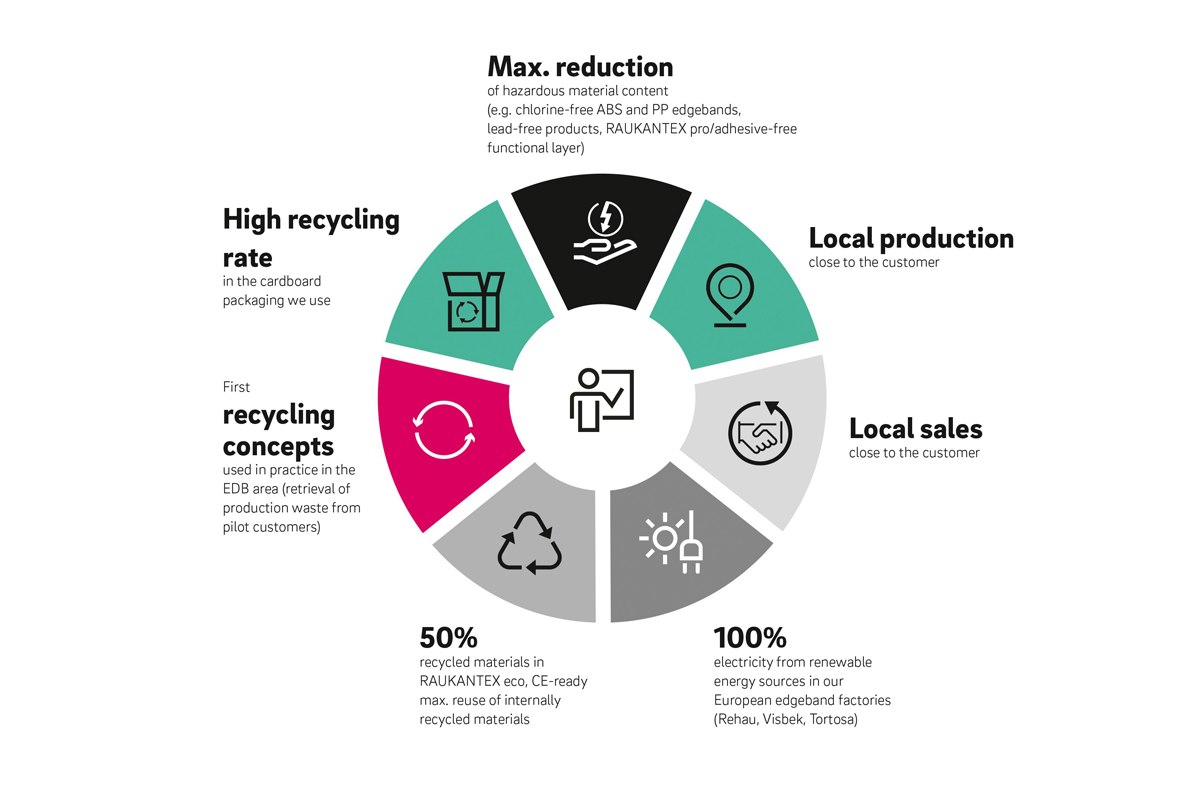
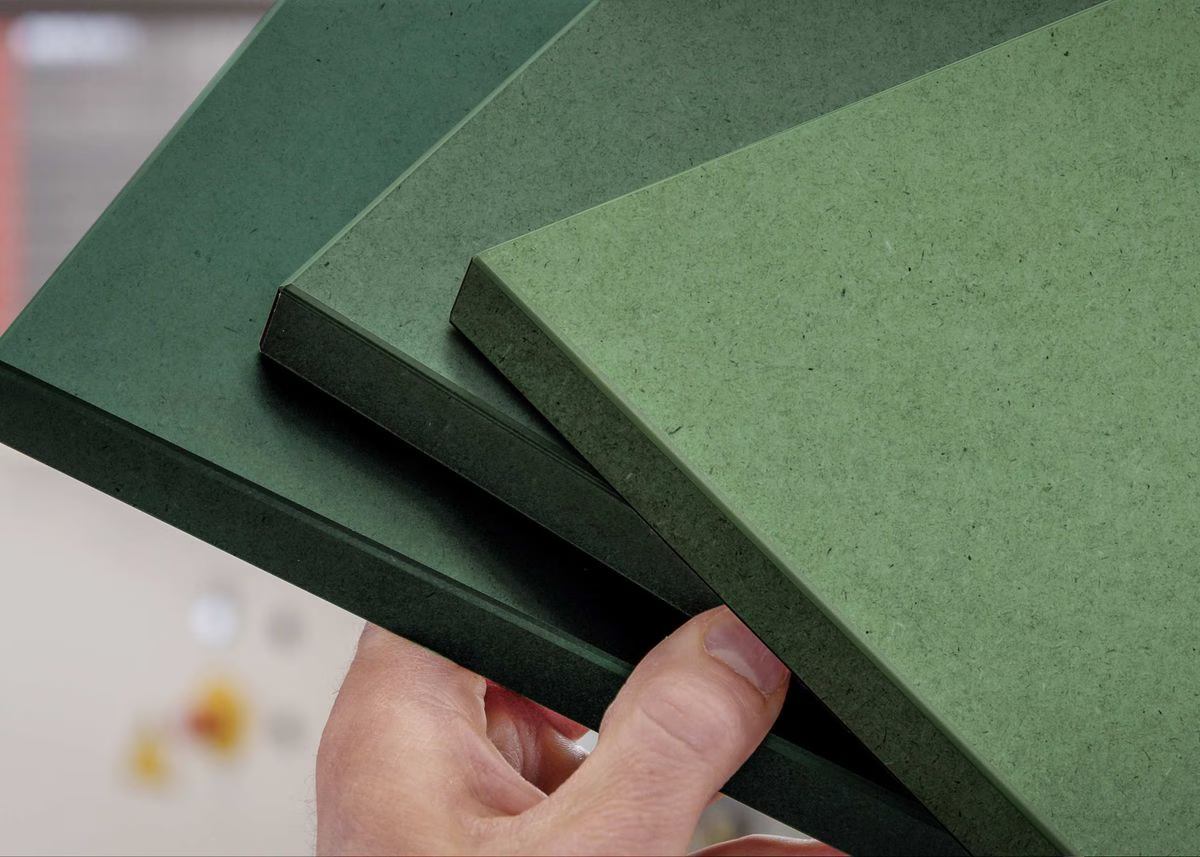
REHAU’s renewed “Planet First” strategy challenges that directly. Their new interior surface solutions target high-end kitchens, wardrobes, and furniture systems. Moreover, they deliver finishes that rival traditional glossy and matte luxury laminates. At the same time, they incorporate high percentages of recycled polymer content. Some products draw up to 100% from externally sourced recycled materials.
Additionally, REHAU runs the ReTurn programme. It lets customers send production waste back into a closed-loop recycling stream. Hundreds of tons of material stay out of landfill every year as a result. That is not a footnote. That is infrastructure.
REHAU Eco Materials and the 78% Signal
Numbers rarely move me on their own. But this one carries real weight: 78% of interior designers globally now specify sustainable materials as a conscious project requirement. Furthermore, the global green building materials market was already worth $269 billion in 2021. It continues to grow fast. Consequently, sustainability has moved from differentiator to baseline expectation.
This shift changes how we read a brief. When a client asks for a premium kitchen or a refined workspace, sustainable specification is no longer a virtuous add-on. Instead, it arrives embedded in the definition of quality itself. The Ellen MacArthur Foundation has outlined precisely this trajectory. Circularity, when executed with precision, produces objects of greater inherent value — not lesser.
The Language of Quiet Luxury
Here is where the conversation becomes most interesting to me — as both a designer and a critic. REHAU’s material direction aligns almost perfectly with the dominant aesthetic of the moment: quiet luxury. This vocabulary demands surfaces that earn their place through material honesty. Not decorative excess.
Think ultra-clean silhouettes. Soft, low-reflectance finishes. Deep, muted color palettes. Zero visual noise. REHAU’s edgebands fit precisely into this language. They are fully lead-free and free of DOP (Dioctyl Phthalate). Therefore, they eliminate harmful off-gassing over time. Low-VOC choices are not simply health decisions. They are, in fact, aesthetic ones. A surface that does not compromise the air of a space contributes to the sensory integrity of that space. It whispers rather than shouts.
Moreover, this logic extends naturally to tech-adjacent hardware too — desks, console surfaces, peripheral docks, workstation systems. Hybrid work environments increasingly demand considered design. The case for applying luxury surface thinking to these objects is urgent. Research from the World Green Building Council confirms it consistently. Material quality in working environments directly influences cognitive performance and wellbeing. A surface, therefore, is never merely a surface.
Transparency as a Design Value
One detail in REHAU’s strategy deserves particular attention: Environmental Product Declarations, or EPDs. These are independently verified, lifecycle-based data sheets. They give designers and clients precise information about a product’s environmental impact — from raw material extraction to end of life.
Furthermore, for those of us who specify materials, EPDs represent a real shift. Rather than relying on brand claims, we can base decisions on auditable data. Consequently, the design process becomes more rigorous and more honest. It aligns more directly with what clients actually value. When you select REHAU Eco Materials for a project, you are not simply choosing a finish. You are choosing a design position.
REHAU Eco Materials in My Own Practice
I have spent considerable time navigating exactly these intersections. Where material ethics meet aesthetic precision. Where specification choices become critical design statements. My portfolio reflects this approach throughout. Each project treats surface, form, and material provenance as inseparable — not independent variables. Whether I am developing furniture systems, product concepts, or hardware environments, the same question always returns: does this material earn its presence?
The shift that REHAU’s strategy accelerates is one I have already been exploring in practice. You can trace that methodology further through my professional background, where cross-disciplinary design thinking spans product, interior, and brand at every material decision.
A New Default Palette
The conversation REHAU opens is ultimately a design-critical one. It asks us to retire the idea that eco-material specification means compromise. Instead, it positions circularity, recycled content, and transparent lifecycle data as the new foundations of premium material culture.
Therefore, the question for any designer worth their specification sheet is no longer whether to work within sustainable material systems. It is how to work within them with the same depth of intention that has always defined serious design practice.
The surfaces are ready. The material language is rich. The infrastructure — from closed-loop recycling to verified EPD data — now supports the ambition.
What follows is simply design.