Interior wall panel design has crossed a line in 2026. Green credentials are no longer a bonus. They are now a buying requirement. Commercial buyers and interior designers place eco standards on equal footing with visual appeal. The question is not just whether a surface looks good. It must also perform responsibly — from raw material sourcing to end-of-life disposal.
This shift matters to anyone tracking material trends in furniture and product design. Texture, depth, and sustainability are merging into one spec sheet. As a result, the industry is rewriting its priorities fast.
Interior Wall Panel Meets Wellness Architecture
The “wellness architecture” movement has pushed this shift faster than expected. Cities are getting denser. Building users want spaces that support their health. Low-VOC surfaces, clean chemistry, and good air quality are therefore no longer premium extras. They are the new baseline.
Moreover, makers who cannot show a clear green position are losing ground. Buyers notice. They also remember.
PVC-based 3D panels sit right at the centre of this demand. New PVC formulas produce surfaces that are light, moisture-resistant, and chemically stable. They do not release harmful compounds into the air. Furthermore, modern forming methods let these surfaces copy stone, wood, and mineral textures very closely. Specifiers can therefore choose bold aesthetics without guilt.
As shown in a detailed overview of sustainable and eco-friendly 3D wall panel options, engineered panels now use high shares of recycled content. They also stay fully recyclable at end of life. That closed-loop logic fits directly with circular economy goals.
Why Interior Wall Panel Surface Language Is a Proof Point
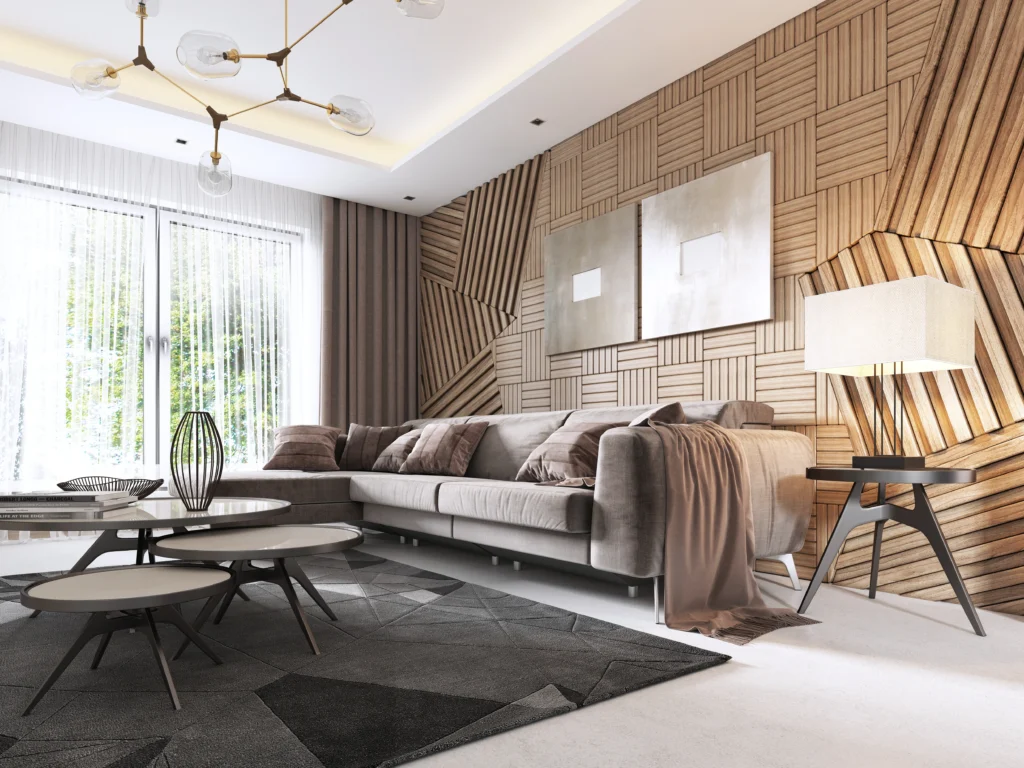
There is a quieter story running below the sustainability news. Three-dimensional surface geometry — deep relief, textured modules, layered depth — is becoming a visual stand-in for responsible production. Buyers read tactile detail as a sign of skill. Skill, in turn, signals clean processes and traceable materials.
In that sense, 3D surface design now carries meaning beyond looks. A modular panel with strong geometry tells buyers that its maker understands precision. Precision suggests a factory that manages VOC levels, recycled content, and production waste well. Those are the exact points that green audits check.
This is not just theory. Wall panel trend data from 2025 shows that green labels like LEED and WELL now drive spec choices at scale. Over 40% of new commercial projects prioritise eco-certified surfaces. Demand for green building materials is also set to rise 15% by 2027. Consequently, designers now treat sustainability as a baseline, not a bonus.
The Logic of Custom Orders and Long-Lasting Panels
Custom orders play a key but often overlooked role in green production. When a maker cuts panels to exact sizes and quantities, the supply chain wastes less. There are fewer off-cuts and no surplus stock. Lean production is, by nature, low-waste production. Therefore, the ability to customise is both a business edge and an environmental one.
Durability adds to this advantage. An interior wall panel built to resist moisture, mould, and UV wear extends the life of a renovation by years. The longer a surface lasts, the fewer resources go into replacements. In addition, panels that work well in tough climates cut the risk of early failure. Early failure is the hidden driver behind most construction waste.
This depth of craft sets a quality maker apart from a basic supplier. As eco-focused wall panel research from 2025 confirms, durable materials such as refined PVC, WPC, and recycled composites consistently score better across lifecycle tests. The upfront cost of quality therefore becomes a sound ecological choice over time.
Interior Wall Panel Rules Across Global Markets
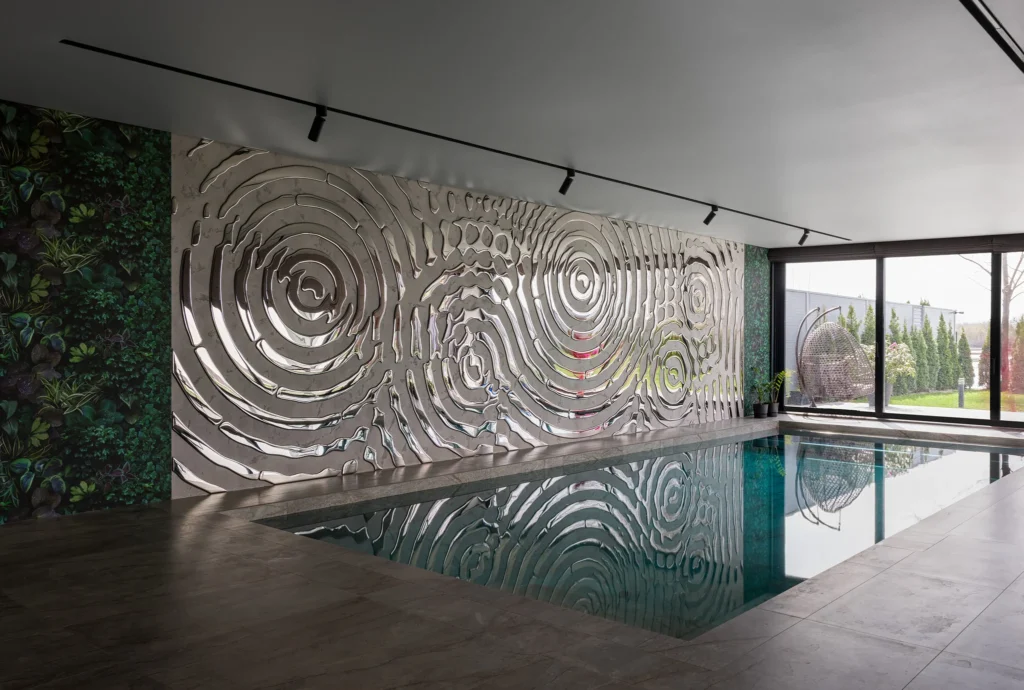
Selling into North America, Europe, and Southeast Asia at the same time is complex. Each region runs its own safety and chemical standards. Nevertheless, all three markets share one clear trend — rules are getting stricter, not looser.
Makers who build compliance into their design process carry a real edge. Response time to rule changes improves. Documentation becomes clearer and more credible. Distributors gain confidence as a result. Today’s B2B buyer arrives at the table already informed, asking for material data and expecting third-party proof — whether that buyer is in London or São Paulo.
The global market rewards makers who publish recycled-content data and low-VOC test results. Green claims must connect to real process choices. Those that cannot show that link will find fewer doors open.
Connecting the Surface to the Bigger Design Conversation
As a product and furniture designer, I follow material trends across scales — from finish decisions on a chair series to the surface chemistry of a full interior system. The merging of 3D surface design and green production is one of the biggest shifts I have seen in years. It shapes how I think about modular structures, layered finishes, and the spec language that helps products win in export markets.
If you want to follow this material conversation further, the intellence.eu/news archive covers design commentary on experimental finishes, product envelopes, and the industrial thinking behind modern surfaces. For background on my work in furniture and product design — and the export markets where these choices play out daily — visit intellence.eu/resume.
Walls carry more meaning than their finish alone suggests. In 2026, a well-chosen interior wall panel signals material values, production care, and design thinking all at once. That makes the spec decision more important than ever. It also makes it far more interesting for those of us who treat every surface as a design statement.