Furniture design copyright just changed forever.
On 4 December 2025, the Court of Justice of the EU (CJEU) delivered its ruling in the Mio/Konektra cases. That decision set new originality standards for furniture and applied art across Europe. Consequently, every designer, maker, and retailer now operates under a new legal landscape.
Furniture Design Copyright: Two Cases, One Big Question
Two real disputes triggered this ruling.
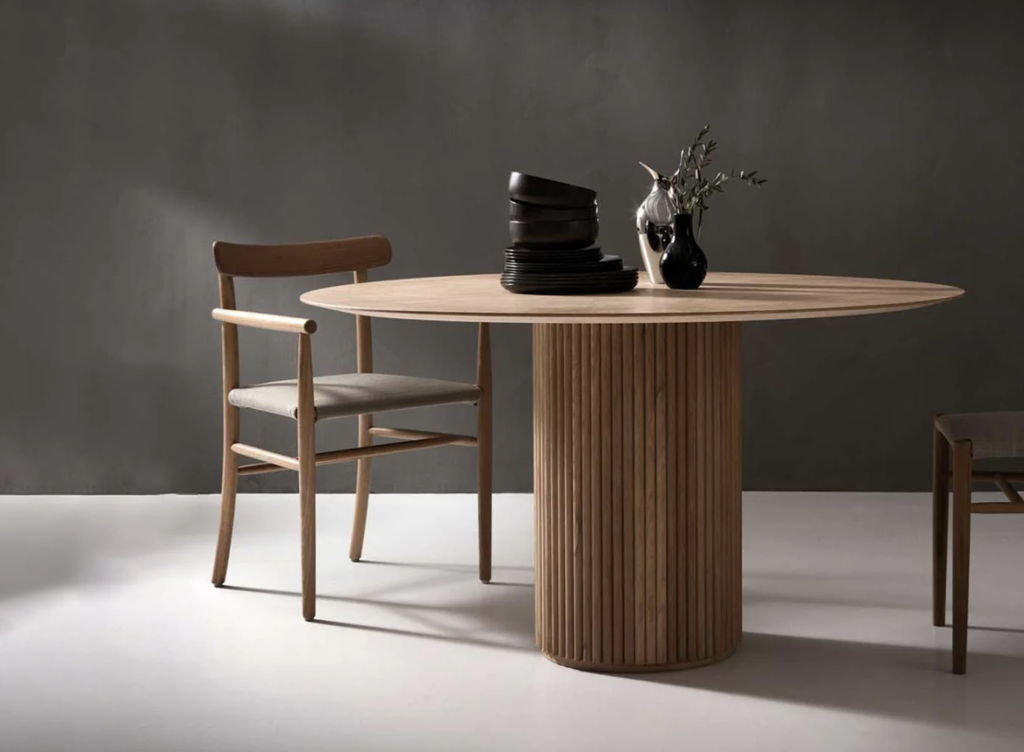
In Sweden, retailer Mio sold dining tables that allegedly copied the Palais Royal series. Asplund’s design house took the case to court. Meanwhile, in Germany, manufacturer USM accused retailer Konektra of copying the Haller shelving system outright.
Both national courts asked the CJEU the same question. When does furniture earn copyright protection? Those answers now shape how every designer and retailer across Europe must work.
The Three Rules of Furniture Design Copyright
Its ruling rests on three clear points.
First, copyright and design rights sit side by side. Neither one is superior to the other. A designer can claim both at once.
Design law needs novelty and individual character. Copyright, on the other hand, needs originality. That originality must show in the visible, free choices of the designer.
Second, originality lives in the object — not in the designer’s mind. Courts must look at the finished piece. They ask: do these elements reflect the author’s personality?
The CJEU rejected the role of private intentions. Instead, visible creative decisions carry all the legal weight. Furthermore, using existing shapes does not destroy originality.
A designer who arranges those shapes through genuine creative choices can still claim furniture design copyright.
Third, infringement turns on recognizable creative elements. A court must first find which elements carry the author’s personality. Then it checks whether those same elements appear in the rival product.
Notably, an overall visual impression test does not apply here. That standard belongs to design law alone.
Why Furniture Design Copyright Outlasts Design Rights
Design rights offer speed and EU-wide reach. However, they expire.
Copyright lasts 70 years after the author’s death. It also needs no registration at all. For a classic piece still in production after decades, furniture design copyright becomes the stronger long-term shield. Additionally, The Fashion Law confirmed that applied art now carries the same copyright standard as sculpture or literature. That is a landmark shift for the entire furniture sector.
Furniture Design Copyright in Practice: What Makers Must Do Now
This ruling resolves one debate but opens another. How do designers prove that their choices were free and creative?
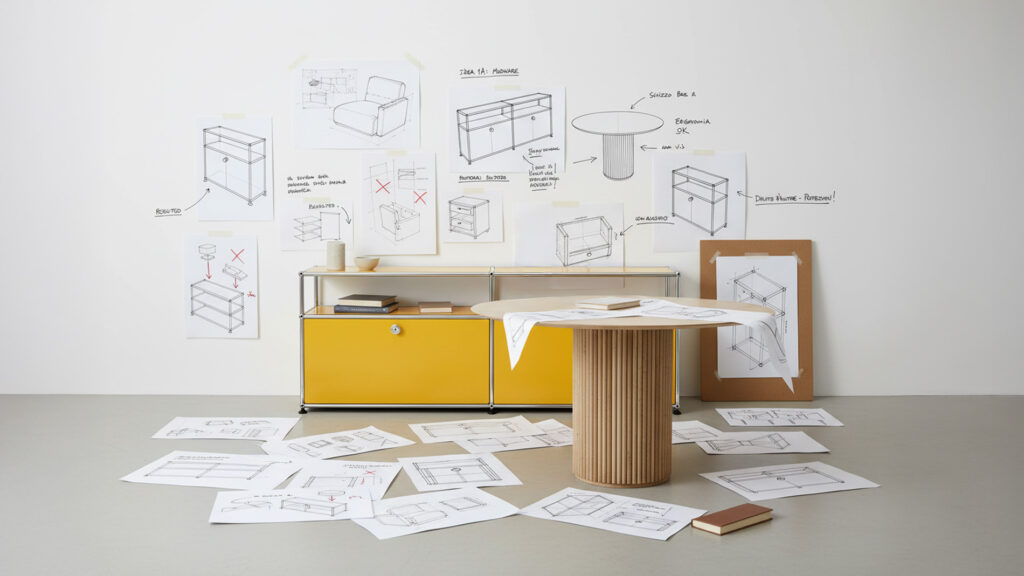
The CJEU placed the burden of proof on the rights holder. Therefore, designers must build strong documentation habits from day one. Sketches, prototypes, and design notes all become evidence. Garrigues notes that choices driven purely by technical limits carry no originality. However, choices made within those limits — where personality still shines through — absolutely do.
Consequently, manufacturers must log the design process from first sketch to final sample. Furthermore, Italy once required a work to appear in a museum before claiming protection. That national rule now conflicts with EU law. As IPKat’s analysis notes, the recognizability test will continue to spark debate in national courts ahead. Nevertheless, the direction is clear.
Europe applies one unified originality standard to all works. Furniture design copyright now sits at the very heart of that standard.
The Studio Becomes the Evidence Room
This ruling changes how I think inside my own studio. Every decision is now a legal asset.
I choose a joint detail over a simpler one — that is evidence. Picking a material finish for visual rather than structural reasons — that is evidence too. Setting a proportion beyond ergonomic need becomes, again, proof of creative authorship.
Therefore, the studio process must become both artistic and strategic. The CJEU rewards designers who exercise real creative freedom. Equally, it exposes those who only recombine standard elements without genuine intent.
Moreover, the ruling dismisses one common legal defense. A later, independent creation does not escape infringement on its own. Originality stays the decisive factor at both ends of any dispute.
From the Studio to the Bigger Picture
Design authorship and legal protection are inseparable. I write about that connection often at intellence.eu/news. There, I explore how design decisions — from material logic to structural form — shape the objects we create and the industry debates we lead. This ruling, therefore, reinforces a principle at the core of my practice: the visible choices in a finished piece tell the full story of its authorship. Explore my background and design methodology at intellence.eu/resume to see how that thinking applies across furniture, product design, and professional workstation environments.