The inspiring elevation of aesthetics in HAEF
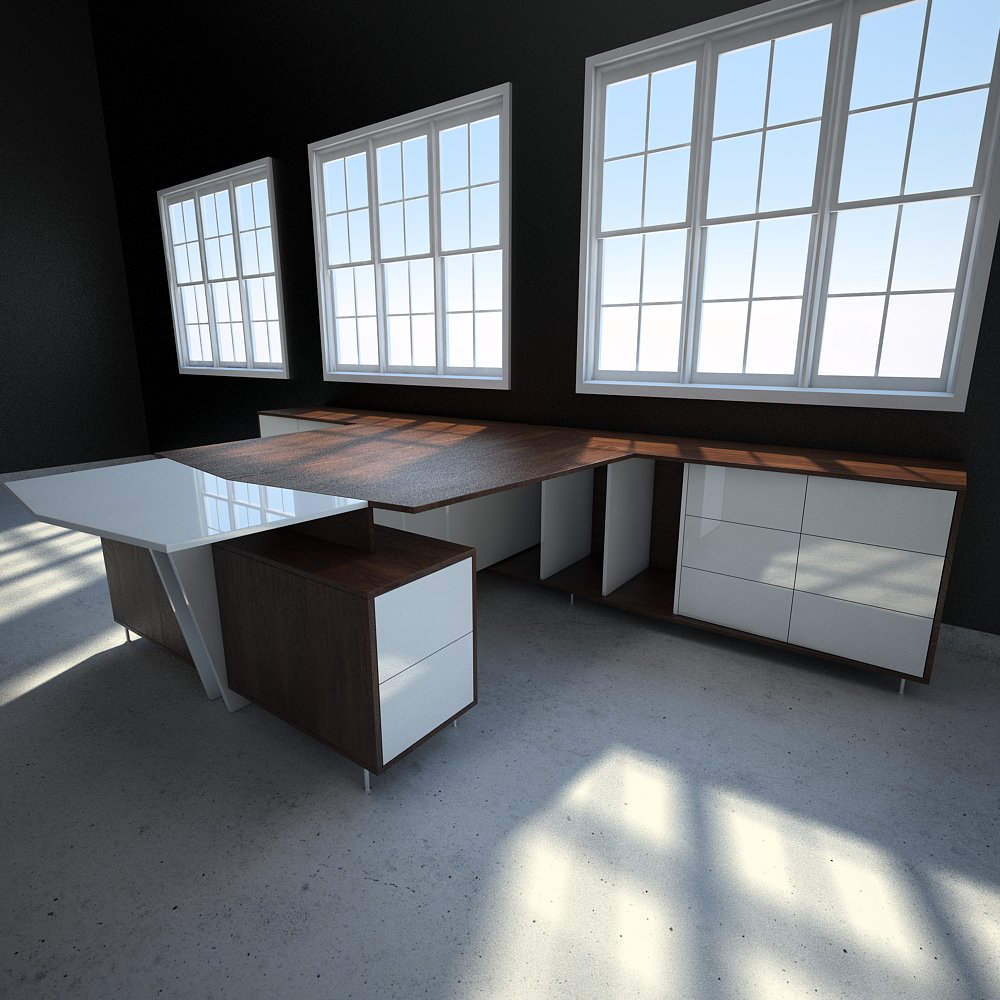
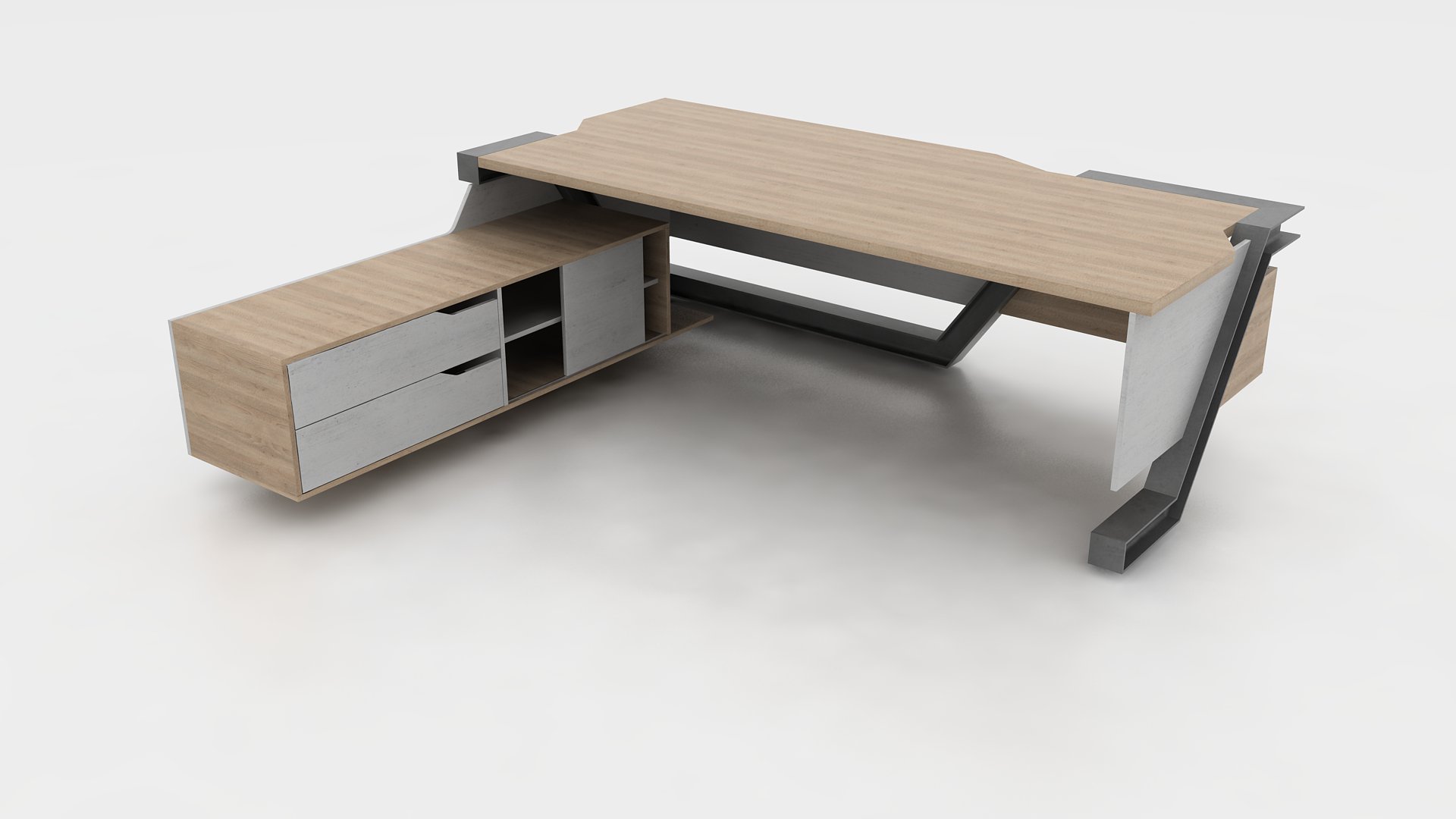
This project for the Hellenic-American Education Foundation (HAEF) that I redesigned several classrooms’ furniture across the campus.
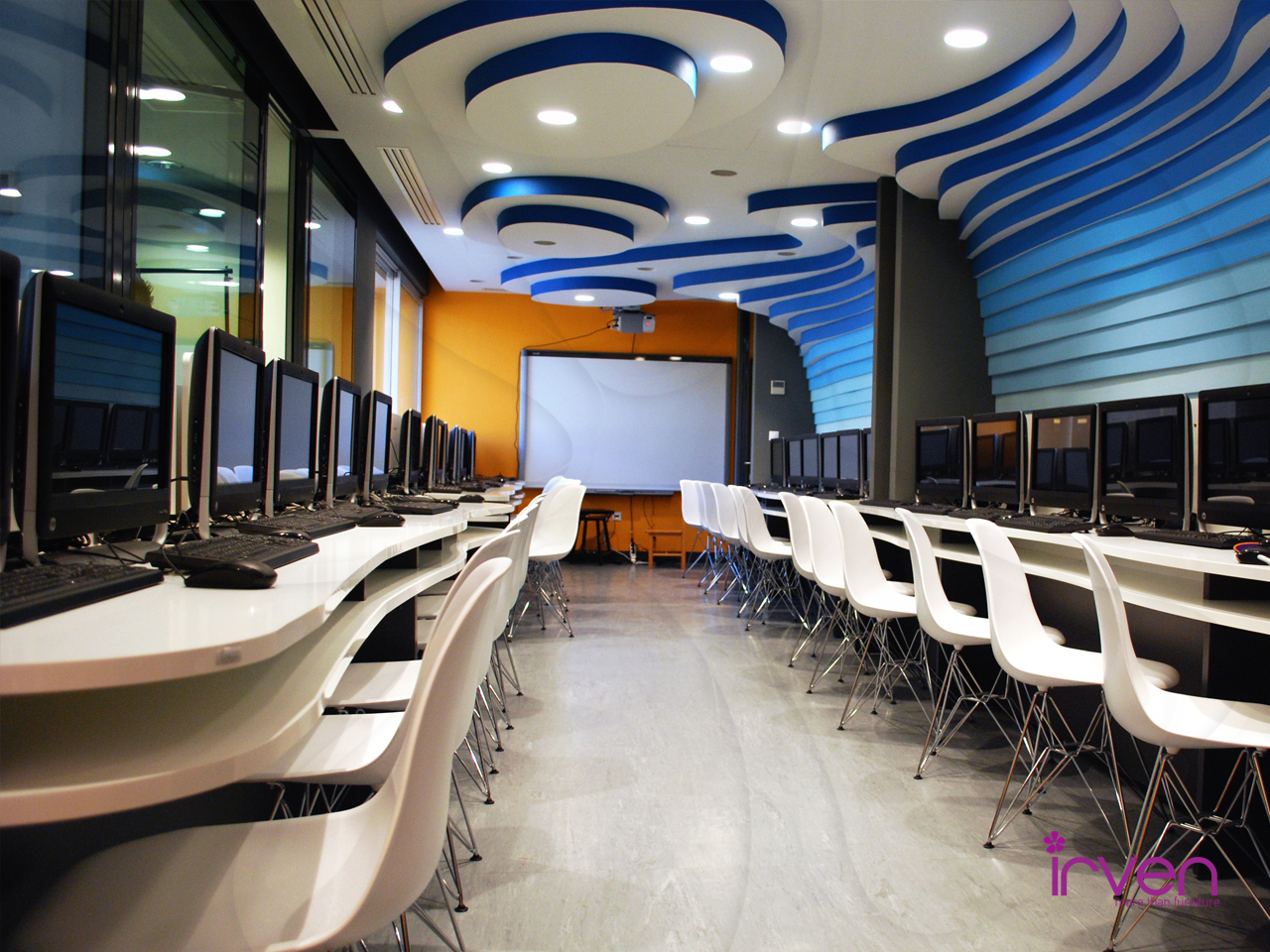
The goal was clear, since the school wanted technology fully integrated into flexible learning spaces.
Therefore, every furniture piece supports computers while still keeping the rooms tidy, safe and ergonomic.
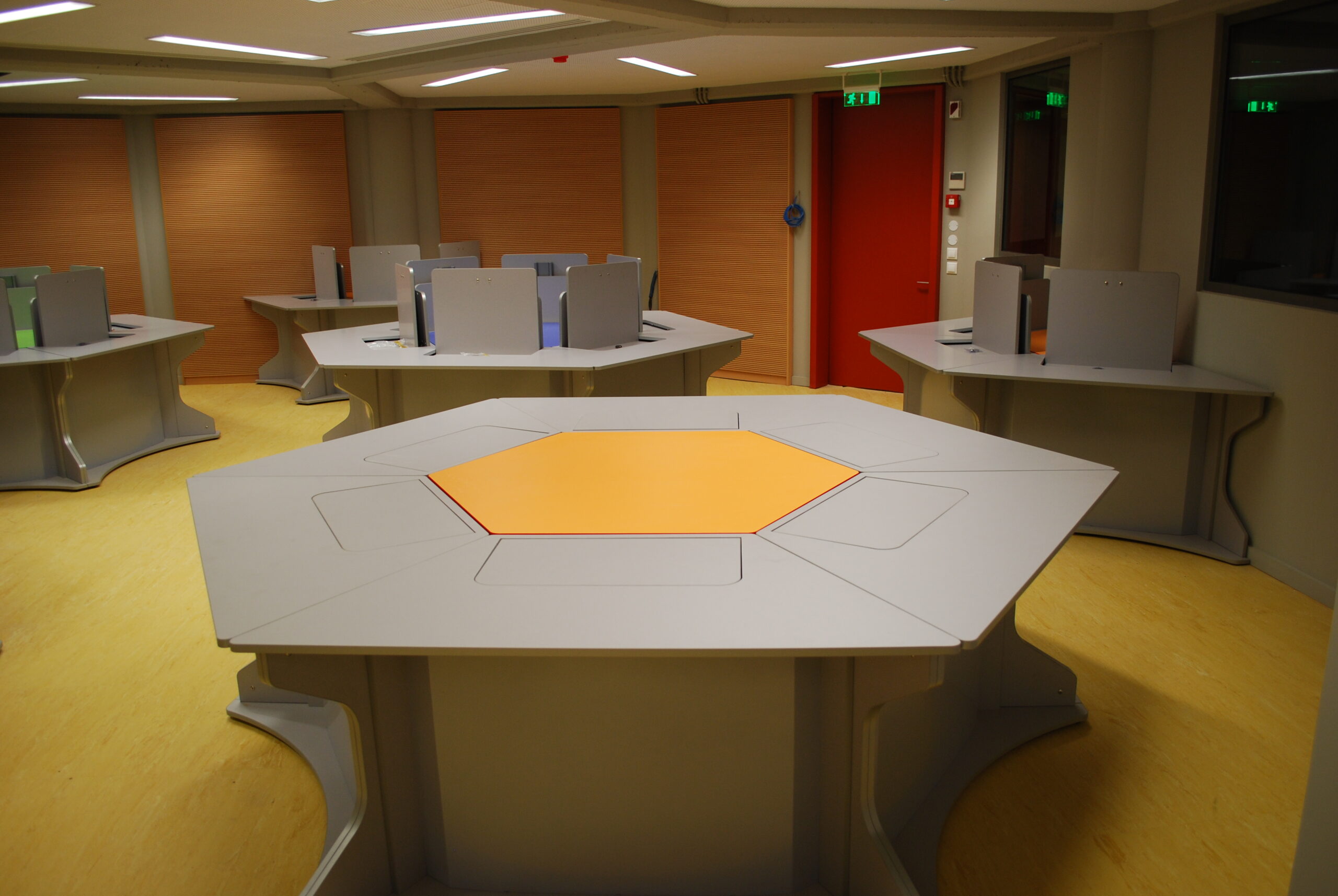
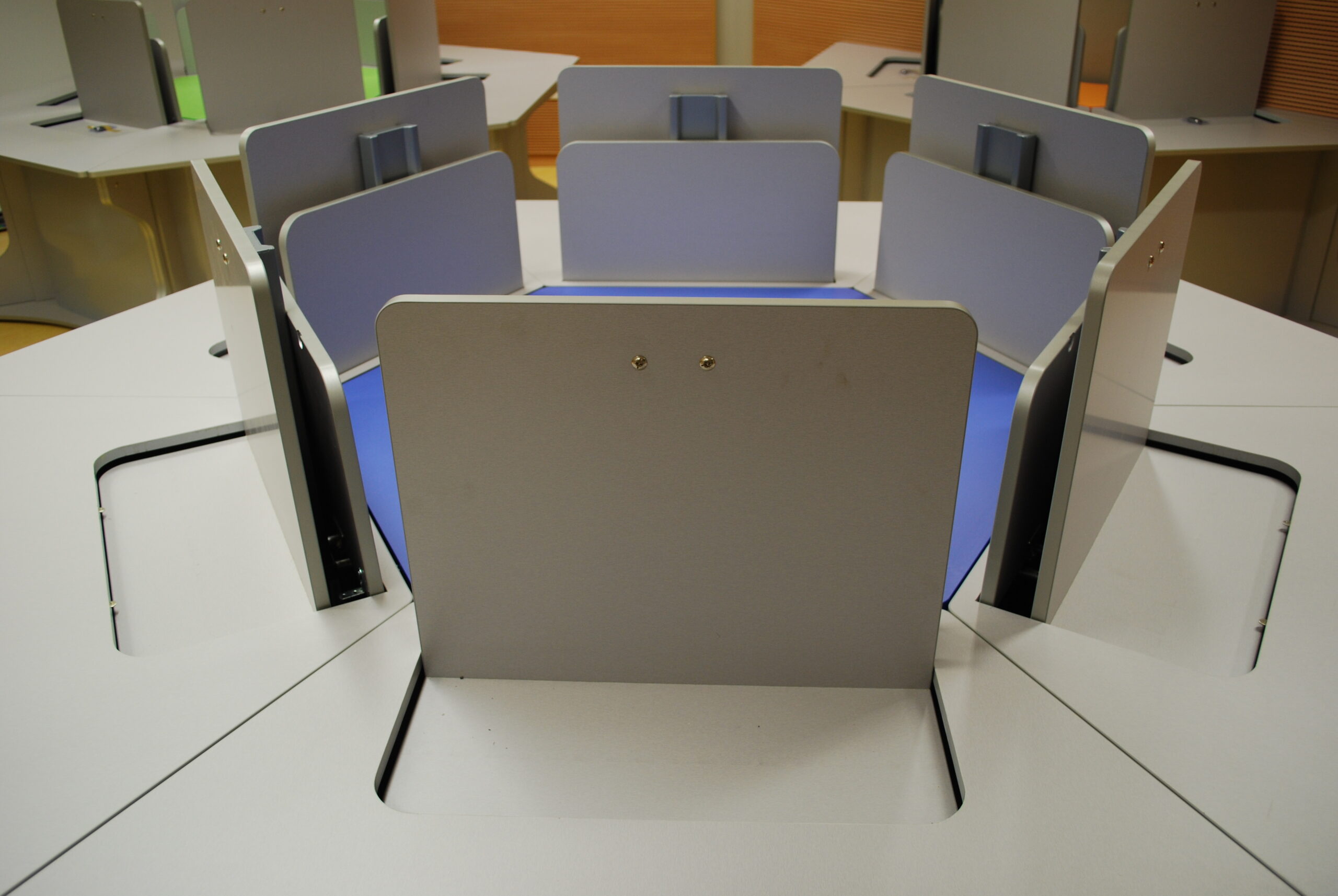
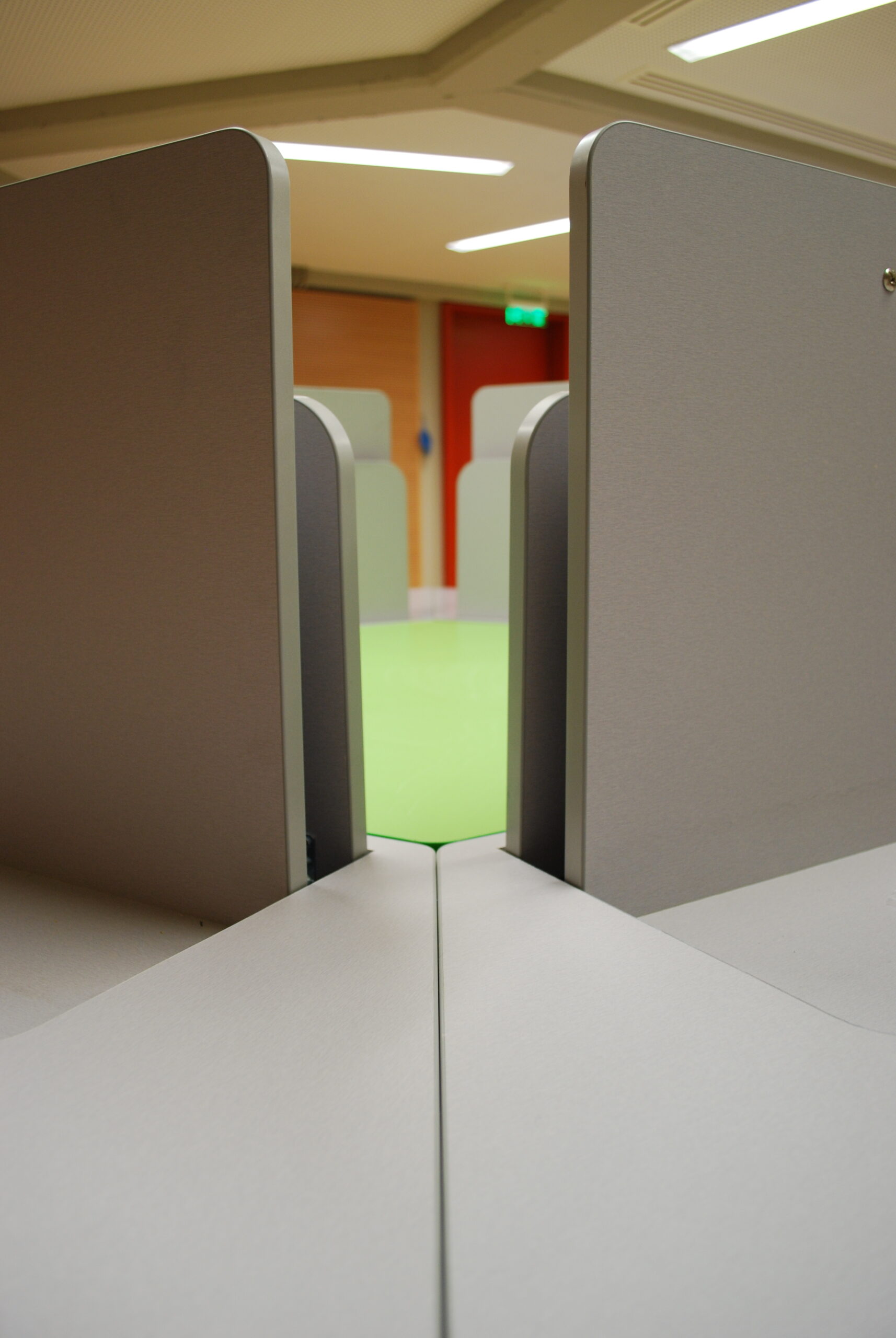
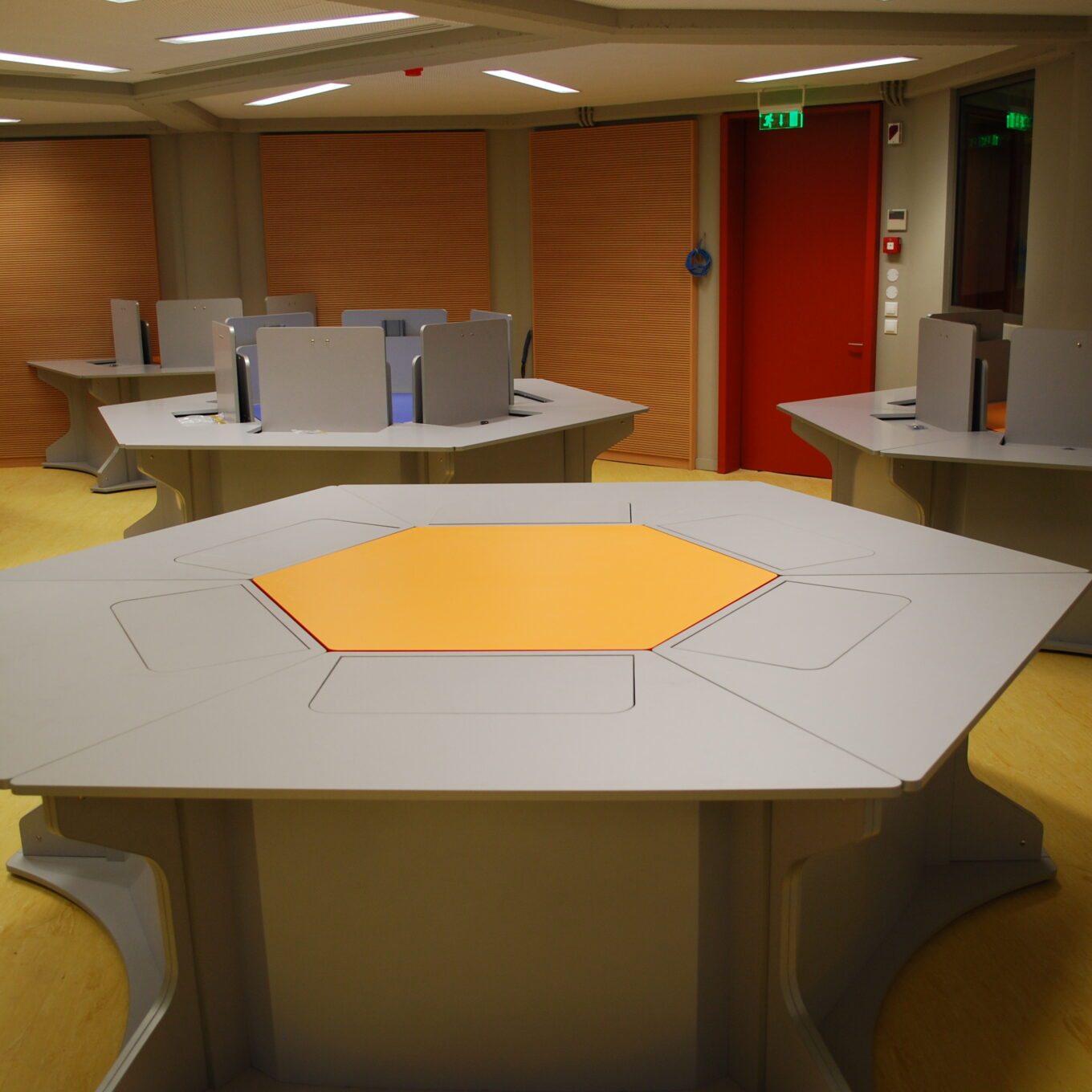
In the computer classroom for younger students, the flower‑desks become the main feature.
Each set of desks forms a circular, petal‑like cluster that brings students face to face.
As a result, children in HAEF Facilities can collaborate easily, share ideas and still follow the teacher clearly.
With a single remote command, every computer rises smoothly from inside its desk.
Then, when lessons change, the screens disappear again, and the surface becomes completely free.
This transformation protects the devices, reduces distractions and supports both play and study.
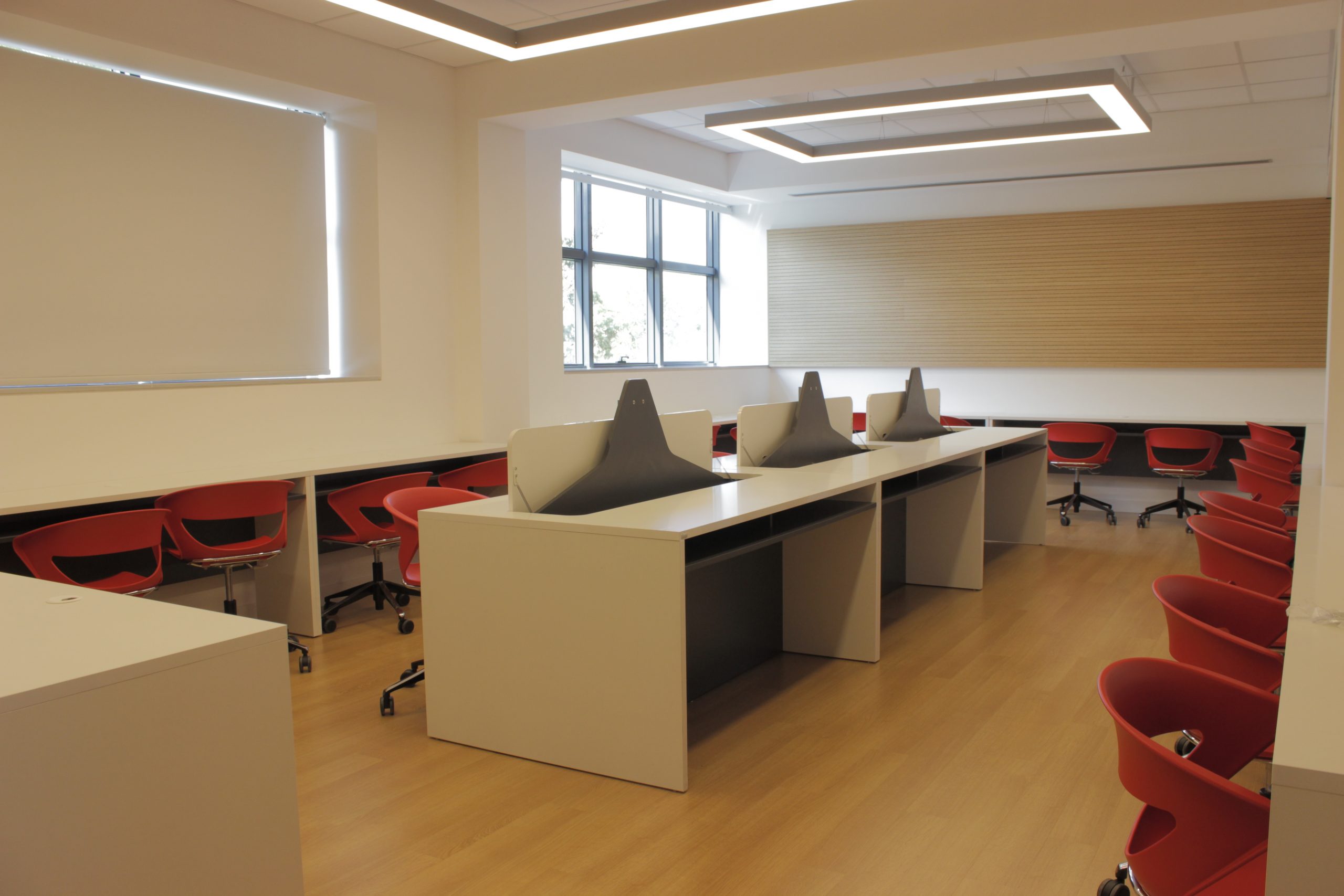
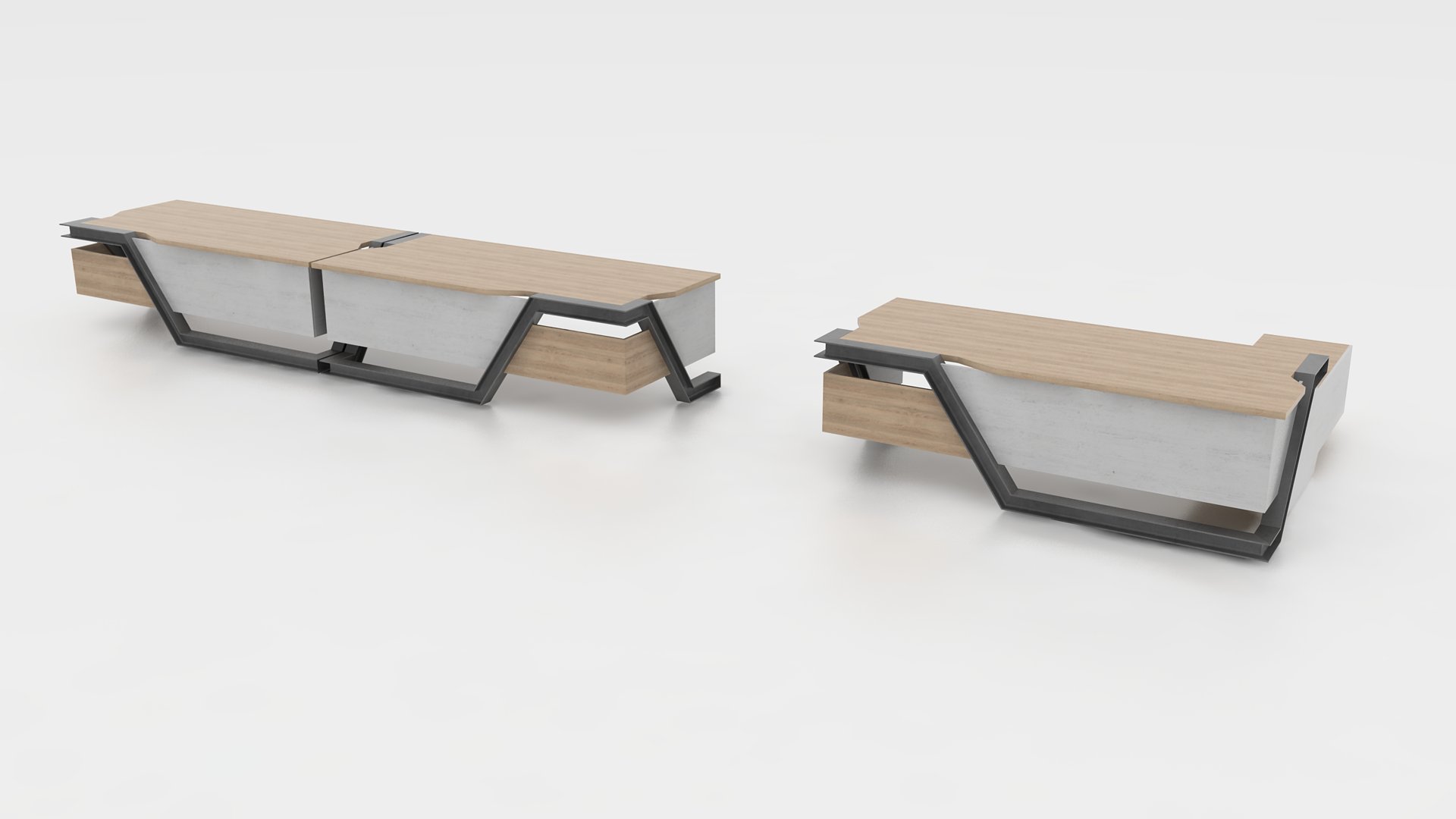
In the English classroom of HAEF, a long shared workbench runs along the room.
Each seat includes its own computer that lifts and hides through remote control.
Teachers can switch quickly between digital activities and traditional reading or writing tasks.
Because cables and mechanisms stay hidden, students move comfortably and focus on language work.
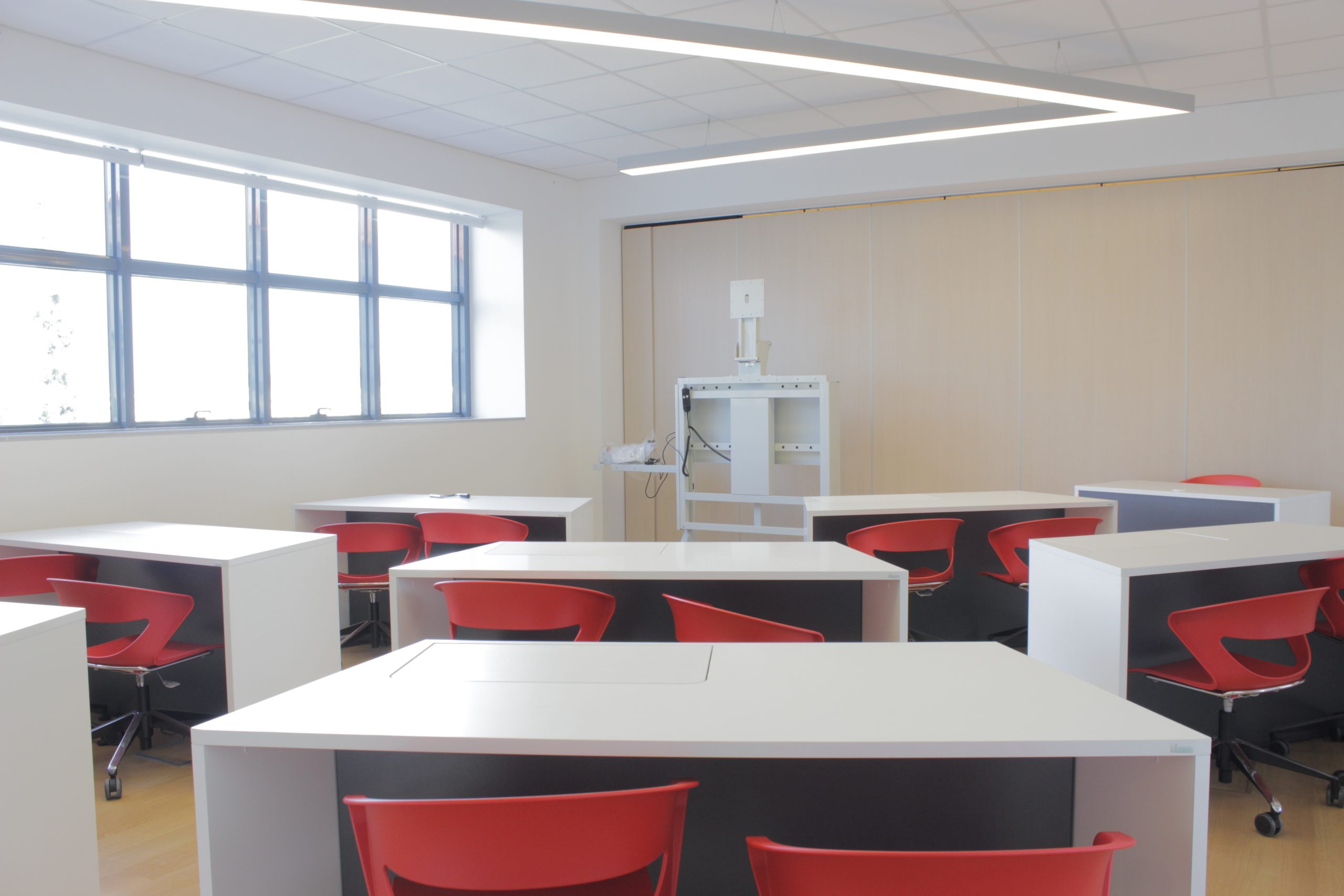
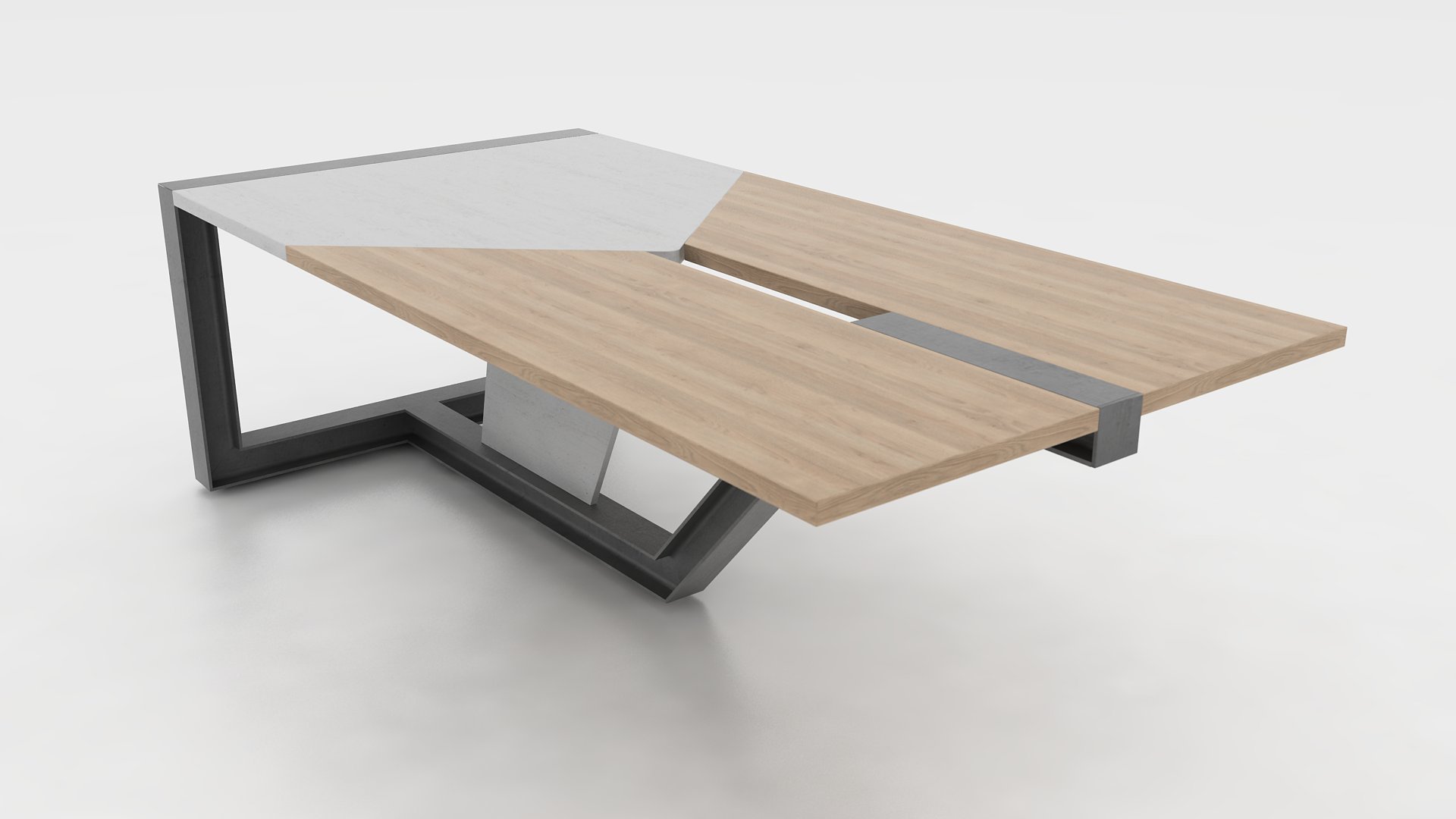
The Robotics classroom uses desks designed for hands‑on STEM projects.
Each station offers a sturdy surface for building robots and experimenting with electronics.
When students need software or research, they raise the computer instantly at their seat.
Afterwards, they hide the computer again to gain space for tools and components.
This flexibility supports project‑based learning and keeps the classroom organized and efficient.