Lignin 3D printing arrived in my inbox on a Tuesday morning, buried in a research newsletter I almost deleted. Yet something about this breakthrough stopped me mid-scroll. While designers worldwide chase sustainability without sacrificing aesthetics, researchers in Germany had quietly unlocked a solution that seemed almost too good to be true—a way to 3D print “wood” that actually felt like wood, performed like wood, and could be recycled endlessly without losing its soul.
Picture this: you’re holding a chair component that looks like walnut, feels warm to the touch, and boasts intricate parametric geometries impossible to achieve with traditional woodworking. Now imagine melting it down when you’re done and printing something entirely new. That’s the promise of lignin 3D printing. At Helmholtz-Zentrum Hereon, researchers transformed wood industry waste into a fully recyclable printing ink that captures timber’s essence without cutting a single tree. This isn’t another eco-friendly experiment destined for academic journals. Instead, it’s a genuine pathway to sustainable manufacturing that designers can actually use.
How Lignin 3D Printing Transforms Waste Into Design Gold
I remember the first time I explained lignin to a client. “It’s the stuff that makes trees woody,” I said, watching their eyes glaze over. Most people have never heard of it. Even fewer know that wood processing plants typically burn it for energy or dump it as waste. Nevertheless, this overlooked byproduct holds remarkable potential for lignin 3D printing applications.
The Helmholtz team saw what others missed. They engineered a lignin 3D printing ink that captures wood’s essence without requiring trees to be harvested. Moreover, the material maintains structural integrity through multiple recycling cycles. This means products can be reprinted endlessly without degradation—a holy grail in sustainable manufacturing. Consequently, lignin 3D printing delivers a truly circular material that doesn’t compromise on performance.
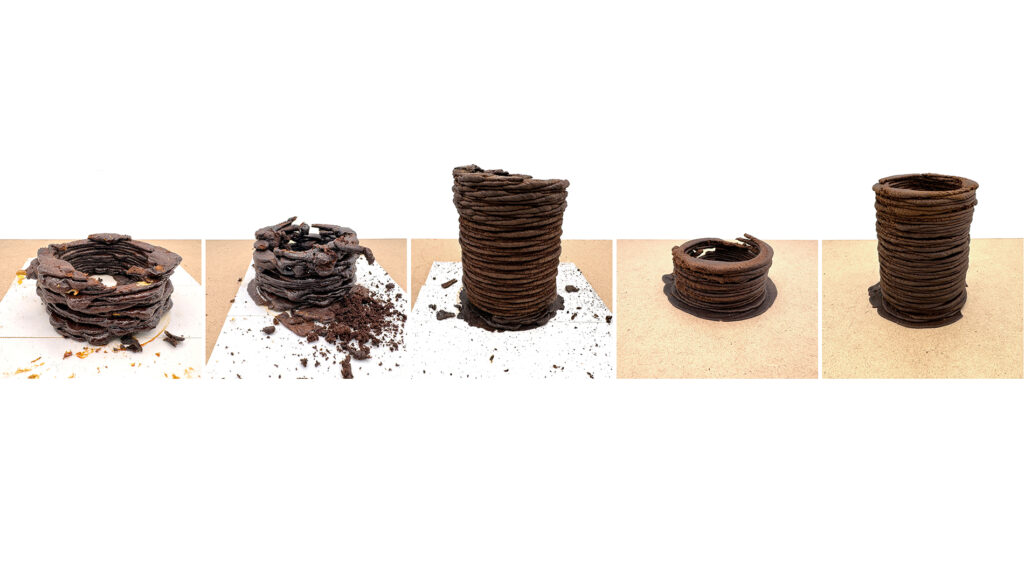
This approach fundamentally changes how we conceptualize wooden components. Previously, creating complex geometries in wood required extensive CNC machining, hand carving, or lamination processes. Now, however, lignin 3D printing enables intricate parametric forms that would be impossible through conventional methods. Furthermore, the ink responds to different printing parameters, allowing unprecedented control over texture, stiffness, and visual character. Each lignin 3D printing session becomes an opportunity to fine-tune material properties for specific applications.
Where Design Freedom Meets Sustainability
Last month, I watched a furniture designer sketch impossible curves on her tablet. “Can we actually make this?” she asked, doubt creeping into her voice. Traditional wood furniture faces inherent limitations—grain direction dictates cutting patterns, moisture content affects dimensional stability, and joinery requires careful planning. Her dream design would have required laminating dozens of thin layers, each cut precisely and glued under pressure. The cost would be astronomical.
Then I showed her what lignin 3D printing could do. Her eyes widened as she realized the implications. Complex geometries flow directly from digital models to physical reality. Consequently, concepts that once lived only in renders can now manifest as tangible products with genuine wood-like appeal. Moreover, lignin 3D printing liberates designers from traditional woodworking constraints entirely.
Think about ergonomic handles that perfectly conform to human grip patterns, chair backs with variable density zones for targeted support, or decorative panels featuring organic lattice structures that couldn’t exist before. Additionally, since lignin 3D printing uses sustainable sources and recycles completely, designers can finally tell authentic sustainability stories without compromise.
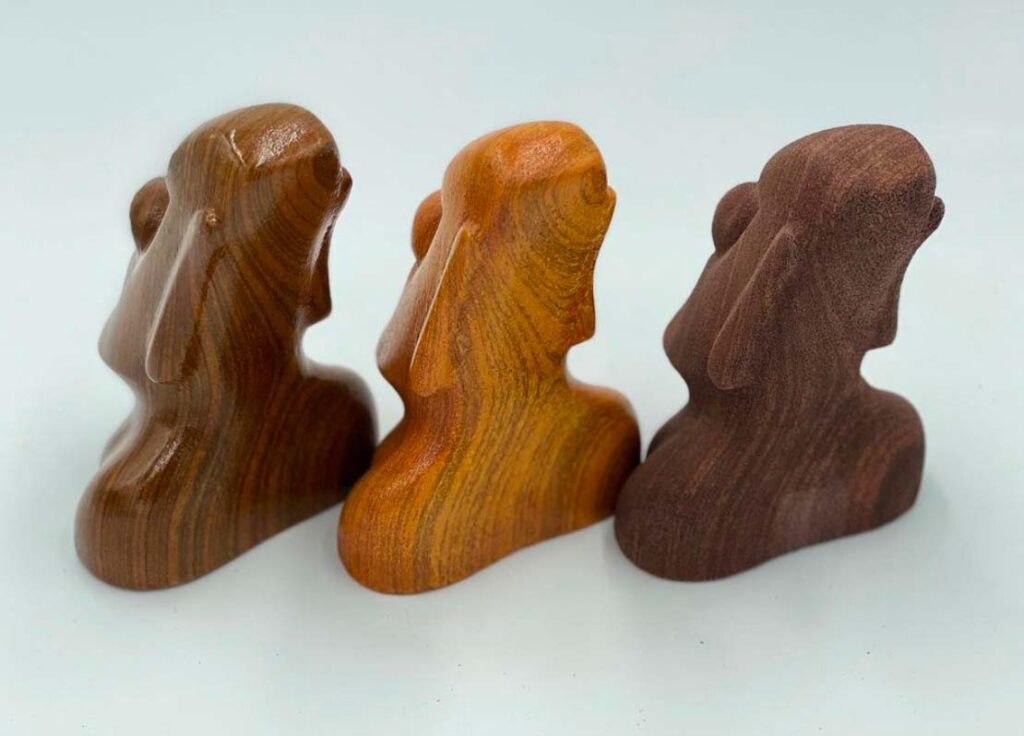
The customization possibilities extend beyond form alone. By adjusting print settings and material blends, lignin 3D printing enables modulation of color intensity, surface texture, and mechanical properties. This flexibility unlocks mass customization at scales previously unimaginable. Furthermore, unlike traditional manufacturing that punishes complexity with higher costs, lignin 3D printing treats intricate designs the same as simple ones.
Real-World Lignin 3D Printing Applications
I visited a design studio in Amsterdam last fall where they’d been experimenting with lignin 3D printing for six months. On their workbench sat a lamp base with flowing, organic curves that seemed to grow naturally from the surface. “Feel it,” the lead designer urged. The warmth surprised me—not just temperature, but that tactile quality that makes wood feel alive. This was lignin 3D printing delivering on its promise.
Forward-thinking studios like this are discovering applications daily. Furniture manufacturers see opportunities in chair components that combine comfort with sustainability through lignin 3D printing. Product designers envision housings for electronics that feel warm and organic rather than cold and plastic. Meanwhile, architectural firms imagine interior elements with biophilic qualities that genuinely derive from natural sources through lignin 3D printing processes.
The material performs particularly well where traditional wood proves problematic. Small, complex components that would splinter or crack in timber work beautifully when created via lignin 3D printing. Likewise, products requiring disassembly for repair or recycling become infinitely more practical when the entire component can simply be remelted and reprinted. Therefore, lignin 3D printing doesn’t just replace wood—it improves upon it in specific contexts.
Interior design applications look especially promising for lignin 3D printing. Custom lighting fixtures with organic forms, acoustic panels with optimized geometry for sound absorption, and decorative wall elements with impossible detail levels all become feasible. Additionally, since the material recycles completely, design firms using lignin 3D printing can offer take-back programs where old products become new ones, creating true circular economy models.
Why Lignin Matters for Design Practice
As someone who works extensively with both traditional and digital design processes, I’ve witnessed firsthand how technology can either enhance or diminish material authenticity. Lignin 3D printing strikes a rare balance. It embraces digital fabrication’s precision while preserving the sensory qualities that make wood irreplaceable in design.
Throughout my career creating design content and exploring innovative manufacturing approaches, I’ve documented numerous materials claiming to revolutionize sustainability. Most fall short in either performance or practicality. However, lignin 3D printing demonstrates genuine potential because it addresses real manufacturing constraints while delivering tangible environmental benefits.
The work showcased in my portfolio emphasizes the intersection of emerging technology and thoughtful design thinking. Similarly, my professional journey, detailed in my resume, reflects continuous exploration of how innovation can serve both functional requirements and aesthetic aspirations. Lignin 3D printing exemplifies the kind of breakthrough that moves sustainability from theoretical ideal to practical reality—something I’ve been tracking and advocating for throughout my design career.
The Path Forward for Lignin 3D Printing in Design
Adopting new materials always requires careful consideration. Designers must evaluate how lignin 3D printing fits specific project requirements. The technology excels in certain applications while traditional materials remain superior in others. Consequently, successful implementation of lignin 3D printing demands understanding these nuances.
Initial adoption will likely focus on smaller components and specialty applications. As production scales and material properties become better understood, larger structural elements created through lignin may follow. Furthermore, as more designers experiment with lignin 3D printing technology, best practices will emerge, accelerating broader acceptance.
The sustainability narrative surrounding lignin carries particular weight. Unlike greenwashing that obscures environmental impact, lignin 3D printing offers measurable benefits. Products genuinely incorporate upcycled waste. They truly recycle without quality loss. Most importantly, lignin 3D printing delivers performance comparable to conventional alternatives while reducing environmental burden.
Conclusion: The Future of Lignin in Design
This breakthrough represents more than incremental improvement. It fundamentally reimagines how sustainable materials can perform in advanced manufacturing contexts. For designers willing to explore its possibilities, lignin 3D printing opens doors to products that were previously impossible, impractical, or environmentally questionable.
The fusion of warm tactility with true circularity creates opportunities that extend far beyond simple material substitution. Instead, lignin 3D printing enables entirely new design languages where organic aesthetics meet computational precision. As this technology matures and becomes more accessible, expect to see lignin transform how designers approach sustainable product development across industries.
The question isn’t whether lignin will impact design practice. Rather, it’s how quickly designers will recognize and harness its potential. Those who embrace lignin early will shape the standards for sustainable, digitally fabricated wood alternatives in the decades ahead. The revolution in sustainable design has arrived, and it smells faintly of sawdust—even though no trees were harmed in the making.