Why AI product design matters now.
AI product design is no longer a futuristic topic; it is rapidly becoming a baseline expectation in both digital and physical products. Because users now live with recommendation feeds, smart assistants, and automation everywhere, they subconsciously expect products to anticipate needs and adapt to context. In other words, if your product ignores AI, it risks feeling strangely outdated even if it looks visually polished.
Yet teams still treat AI as a bolt-on feature instead of a design constraint that reshapes the entire experience. This is where AI product design becomes critical: it helps you decide what should stay human, what should be automated, and how the two can work together without overwhelming your users. For designers, this shift is not only a challenge but also an opportunity to redefine what “good” looks like in a world of intelligent systems.
From features to AI product design mindset.
Most products still grow by adding features, settings, and modes, while users quietly grow more tired and distracted. However, AI product design pushes you to think in terms of outcomes and relationships instead of menus and checklists. You stop asking “What else can we add?” and start asking “What can the system quietly handle so the user does not have to?”
To make this shift, you need a mindset that combines three elements: human-centered research, probabilistic thinking, and ethical framing. Human-centered research keeps you grounded in real needs and constraints instead of speculative hype. Probabilistic thinking reminds you that AI outputs are never fully certain, so your interfaces must gracefully handle ambiguity and failure. Finally, ethical framing forces you to consider how power, data, and defaults affect the people you design for.
Start with personas, not prompts.
Despite all the noise about prompts, AI product design still starts with the basics: understanding who you are designing for and what they are trying to achieve. Personas, when done seriously rather than as “strategy decoration,” help you clarify users’ mental models, risk tolerance, and trust thresholds. This is crucial because AI-heavy products often shift control and visibility in ways that can unsettle people if not handled carefully.
Moreover, well-researched personas let you map how different users experience the same AI behavior. For instance, a novice user may want more explanation and handholding, while an expert user may prefer fast, opaque automation with minimal friction. Therefore, your persona work should explicitly document attitudes to automation, data sharing, and the acceptable margin of error.
Designing clear roles for human and machine.
One of the most important questions in AI product design is deceptively simple: who does what, when, and why. If your product does too little, users wonder why AI is there at all; if it does too much, they lose trust or feel displaced. A useful approach is to define a collaboration model where the AI proposes, the human disposes.
In practice, this can mean the AI drafts options, prioritizes alerts, or pre-fills configurations, while the human makes the final call. Interfaces must then make it obvious which parts of the output are machine-generated and how to adjust or override them. Consequently, your microcopy, visual hierarchy, and interaction patterns should consistently reinforce the idea of partnership rather than magic.
Make AI visible, predictable, and respectful.
Trust does not come from showing off complex models; it comes from predictable, respectful behavior. Users need to understand, at least at a high level, what the system is doing with their data and how it reaches certain decisions or suggestions. This does not mean forcing everyone to read long technical explainers, but it does mean surfacing just-in-time cues, clear language, and accessible controls.
Additionally, respectful AI product design treats attention as a scarce resource. Instead of spamming users with clever notifications or overly proactive assistance, you design for calm, context-aware interventions that genuinely reduce cognitive load. You also give users the ability to dial AI assistance up or down, rather than locking them into a single, opaque behavior level.
Prototype AI product design with constraints.
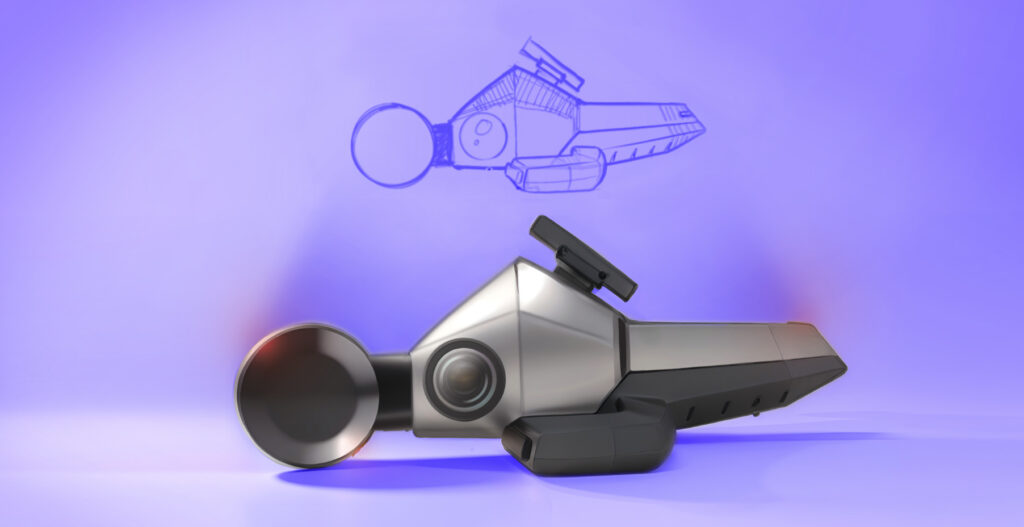
It is tempting to dream about fully autonomous systems, yet effective AI product design often starts with humble, constrained prototypes. For example, you might simulate AI behavior manually during early testing to observe how users react before committing engineering resources. This “Wizard of Oz” style prototyping keeps your focus on interaction quality rather than model performance alone.
Because AI systems can behave unpredictably at the edges, your prototypes should deliberately explore failure modes. You can ask: what happens when the AI is wrong but confident, slow but eventually correct, or simply unavailable. Designing for these edge cases early prevents you from shipping brittle experiences that collapse under real-world complexity.
Connecting AI product design to business value.
No matter how elegant your flows look, AI product design must tie back to concrete business outcomes. These might include less manual work for internal teams, faster onboarding for new customers, or higher-quality decisions for professional users. Importantly, you should define success metrics that reflect both user value and system responsibility, not just engagement or time-on-device.
This is also where strategic positioning matters. Products that treat AI as a differentiator today may find it commoditized tomorrow, so you need a story about why your combination of domain expertise, data, and design creates lasting advantage. If you work as an independent designer or consultant, that story becomes part of your personal brand as well.
To see how an individual designer can frame this narrative and present AI-aware work, explore the main website and portfolio. A focused, well-structured portfolio can spark collaborations much faster than any generic résumé page.
Visit my main portfolio on Intellence to see how research, ergonomics, and emerging technology come together in real projects: https://intellence.eu
Learn more and keep evolving.
AI product design in 2026 is not a finished doctrine; it is a moving target that will keep shifting as models, hardware, and expectations evolve. Nevertheless, teams that invest in clear personas, thoughtful collaboration models, transparent interfaces, and robust prototyping will be better prepared for whatever comes next. Above all, treating AI as a design material—rather than a mysterious add-on—will help your products feel calmer, smarter, and more human.
If you want to deepen your thinking, you can explore high-quality resources on human-centered AI and design ethics, such as the guidelines published by the Stanford Institute for Human-Centered AI and design-oriented AI toolkits from respected research labs. Additionally, reading case studies from established design consultancies and leading product teams will expose you to the messy reality behind glossy AI launches. With each project, you will learn to ask better questions, design braver experiments, and craft experiences thaAI product design is revolutionizing how we create intuitive, future-proof products. This guide reveals essential strategies—like clear human-AI roles and failure-proof prototyping—to build AI-ready products that earn trust and drive business value. Perfect for designers tackling 2026’s tech landscape.t genuinely earn users’ trust.
Suggested external links:
You can embed at least two of these in the article body as contextual links:
- Stanford HAI – Human-Centered AI principles: https://hai.stanford.edu
- Google PAIR – People + AI Research: https://pair.withgoogle.com
- Partnership on AI – Responsible practices: https://www.partnershiponai.org