Designers like to believe that ideas drive form. In reality, tools often do.
From early paper sketches to today’s AI-assisted design platforms, every generation of tools has quietly influenced how digital and physical products look, behave, and feel. A recent UX-focused essay highlights a truth many designers sense but rarely articulate: the tools we use don’t just help us design products—they actively shape them.
This insight is especially relevant for industrial designers, CMF specialists, and product teams working across hardware and digital ecosystems.
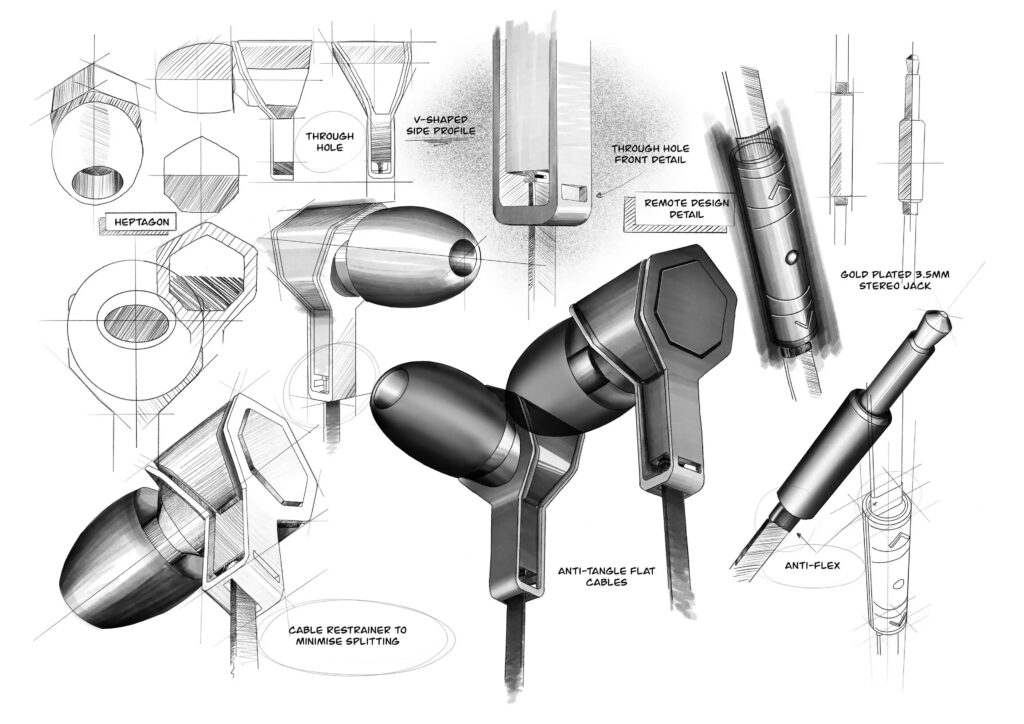
Tools Are Not Neutral—They Bias Outcomes
Historically, each major shift in design tools has changed the visual and functional language of products:
- Paper and marker sketches encouraged expressive, human-driven exploration.
- Bitmap tools like Photoshop pushed designers toward fixed, ornamental screens and visually rich but static interfaces.
- Vector-based UI tools such as Sketch and Figma normalized flat, modular layouts built on grids and components.
- Design systems and cloud collaboration tools shifted focus from one-off screens to reusable patterns, improving consistency but also flattening differentiation.
What emerges is a clear pattern: design tools constrain imagination as much as they enable it. They make certain decisions fast and intuitive—while making others invisible or inconvenient.
This is not a flaw; it’s a structural reality.
From Screens to Systems—and the Cost of Consistency
Modern design workflows prioritize scalability, speed, and cross-team collaboration. Design systems and shared component libraries are now standard practice, especially in large organizations.
The upside is obvious:
- Faster iteration
- Visual consistency
- Reduced friction between design and development
The downside is more subtle: products begin to look and feel the same.
When everyone designs using the same primitives, spacing rules, interaction patterns, and AI-suggested layouts, differentiation erodes. What starts as best practice can quickly become visual monoculture.
This echoes a broader concern we’ve explored before on Intellence.eu—that technological efficiency often comes at the cost of identity and long-term innovation, as discussed in our article on the ARM ecosystem and its impact on future product design.
AI Tools: Acceleration with Hidden Direction
AI-assisted design tools promise speed, exploration, and automation. They generate layouts, propose flows, and recombine patterns in seconds. But they also abstract designers further away from the final artifact.
AI excels at producing what is statistically common, structurally clean, and system-friendly. Over time, this nudges teams toward solutions that are easy for algorithms to generate and scale—not necessarily those that are ergonomically superior, materially innovative, or emotionally resonant.
From an industrial design and CMF perspective, this matters deeply. When tools favor:
- Certain surface continuities
- Easily renderable materials
- Parametric symmetry over tactile nuance
…they influence form, ergonomics metaphors, and even sustainability decisions—often without explicit intent.
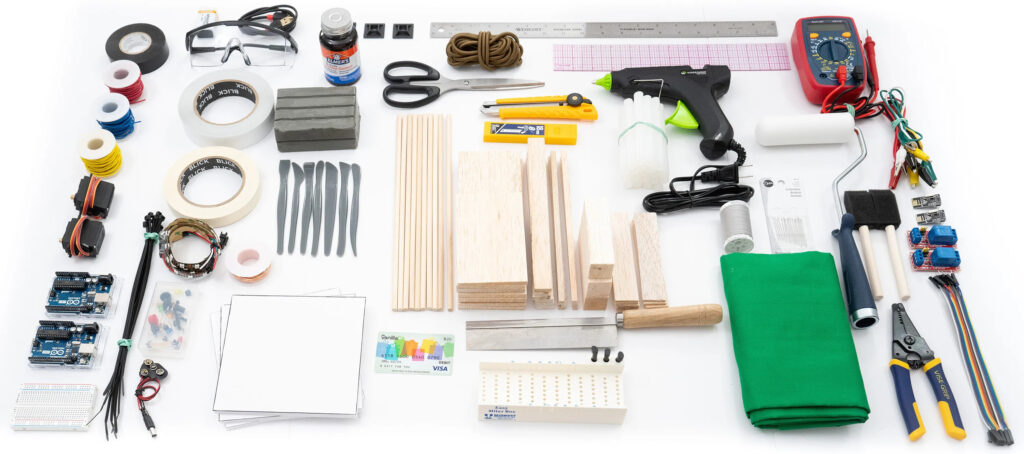
Why This Matters for Industrial and Product Designers
Your core value as a designer lies in balancing:
- Form and function
- Ergonomics and manufacturability
- Materials, cost, and sustainability
Yet many of these decisions are quietly filtered by what your tools make fast, visual, or “safe.” In furniture, consumer electronics, and gaming hardware, this leads to a worrying convergence: products optimized for rendering, not for hands, bodies, or long-term use.
As Marshall McLuhan famously argued, “the medium is the message.” In design, CAD, prototyping, and AI tools are the medium—and they are shaping the message more than client briefs ever could.
Opportunities: Designing Against Tool Gravity
Rather than rejecting tools, designers must work against their biases:
- Intentionally explore concepts using multiple tools (digital and analog) to surface hidden ergonomic or formal possibilities.
- Prototype ergonomics early using low-fidelity physical rigs, especially in gaming hardware and controllers.
- Treat tool constraints as a strategic narrative with clients: explain how certain tools steer material and process decisions.
- Integrate sustainability intelligence directly into the toolchain using LCA plug-ins or material impact dashboards.
These approaches restore authorship without sacrificing efficiency.
The Real Competitive Advantage
In a world where everyone has access to the same software—and soon the same AI—the real differentiator is not speed, but awareness.
Designers who understand how tools shape outcomes can deliberately resist homogenization, make more conscious material and ergonomic choices, and build products with lasting identity.
Because the most dangerous design decision is not the wrong idea—it’s the idea you never see, simply because your tools made it invisible.
Source & Further Reading:
“How the tools we use change the products we design” – UX Design